
How LED Bathroom Mirrors Are Made: 10-Step Manufacturing and Quality Control Process
Introduction
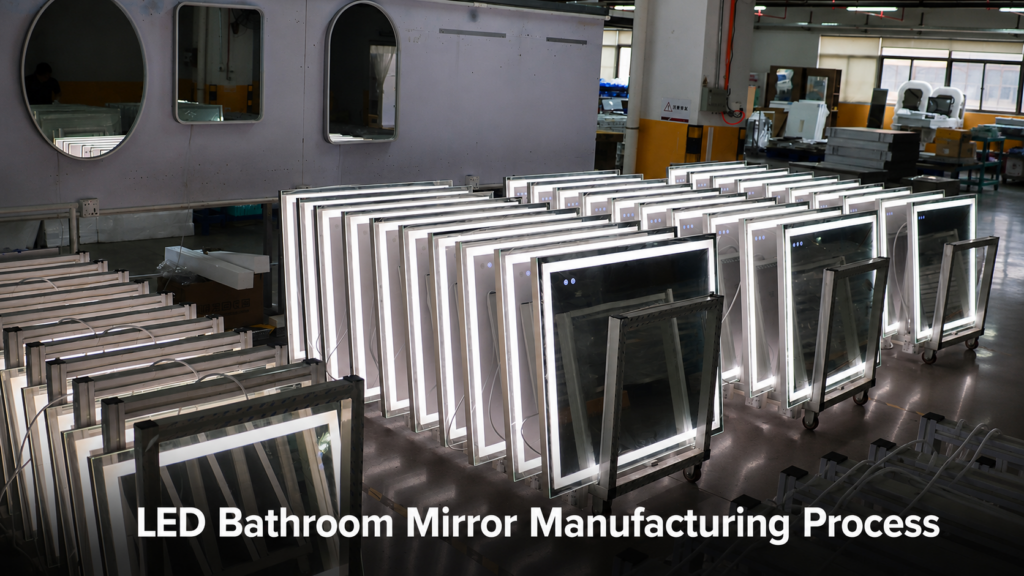
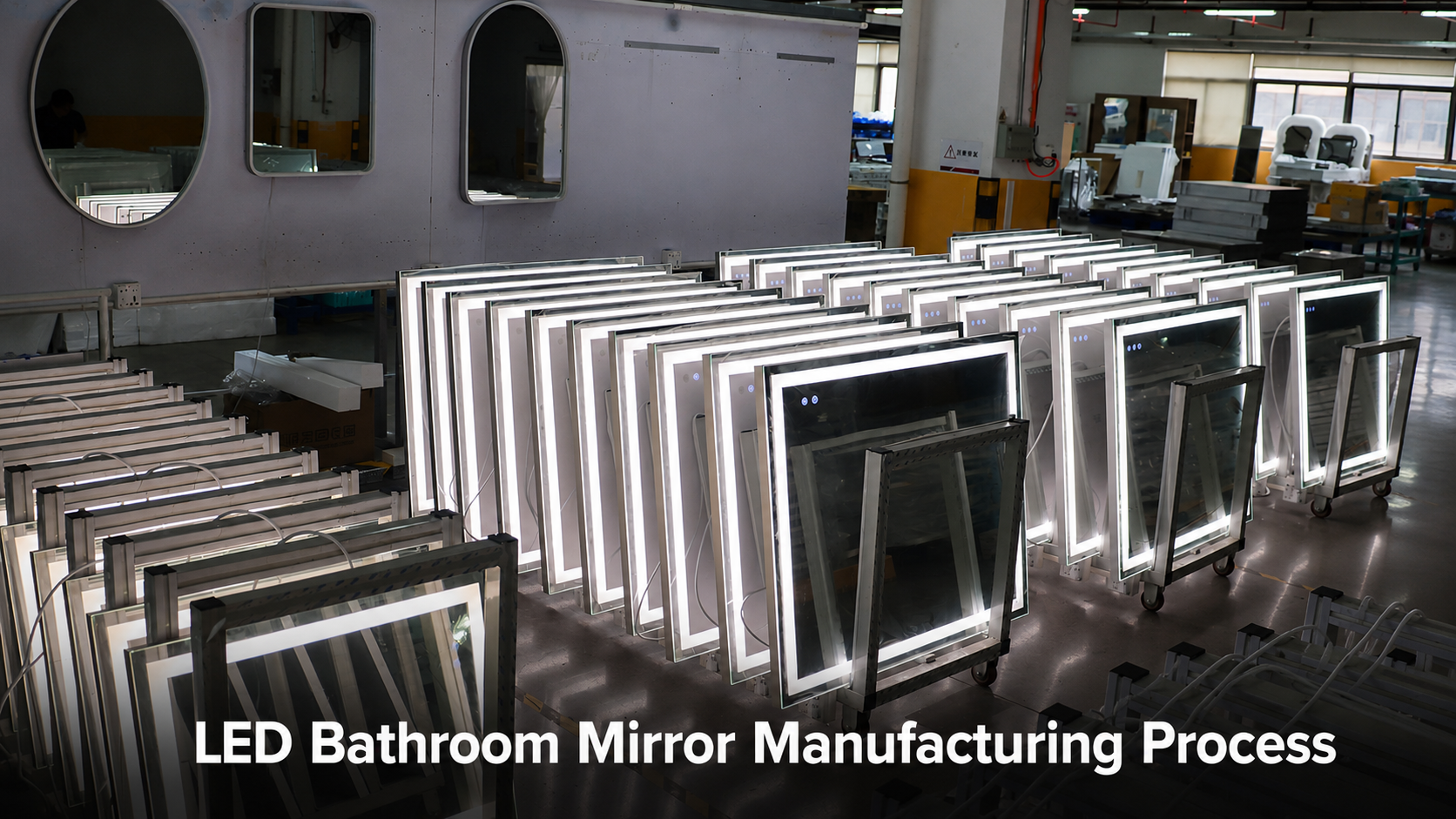
An LED bathroom mirror may look like a simple combination of glass and lighting, but producing a reliable product involves multiple manufacturing and inspection stages. Glass quality, edge processing, LED performance, electrical safety, moisture protection and packaging all affect the final product.
For wholesalers, distributors, retailers and project buyers, understanding the LED bathroom mirror manufacturing process makes it easier to evaluate product quality and select a dependable supplier.For product selection guidance, read our How to Choose the Right Bathroom Mirror for Your Project guide.
A professional manufacturer must not only produce an attractive mirror. It must also ensure that every unit in a bulk order delivers consistent lighting, reliable functions, safe electrical performance and sufficient protection during international transportation.
In this guide, we explain the ten main steps involved in manufacturing LED bathroom mirrors, from raw-material inspection to final packaging.
1. Raw Material and Component Inspection
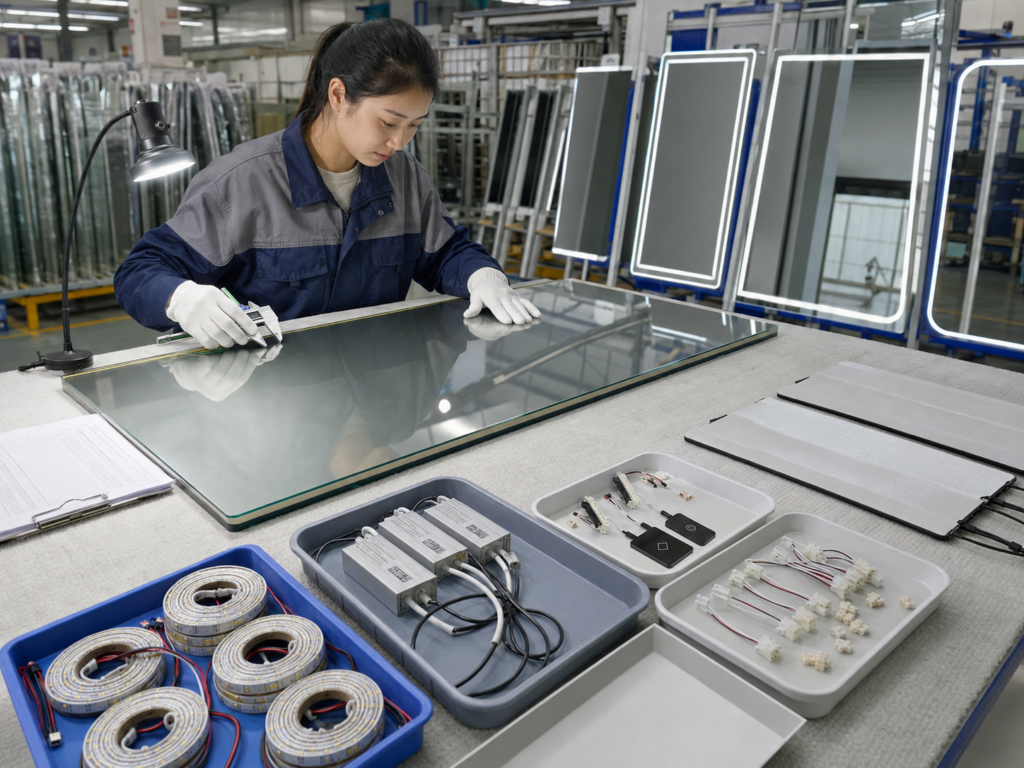
The manufacturing process begins with the inspection of glass and electrical components.
The main materials used in an LED bathroom mirror usually include:
- Mirror glass
- LED strips
- LED drivers
- Touch or motion sensors
- Anti-fog pads
- Aluminium frames or metal back panels
- Electrical wires and connectors
- Mounting hardware
Mirror glass should have a clear, distortion-free reflection and a clean surface without scratches, black spots or visible defects. The thickness and dimensions must also meet the requirements of the production drawing.
Electrical components should be checked according to the product specification. LED colour temperature, driver voltage, power output, sensor type and plug standard must match the target market and order requirements.
Careful incoming inspection helps prevent unsuitable materials from entering the production line and improves consistency across large wholesale or project orders.
2. Glass Cutting
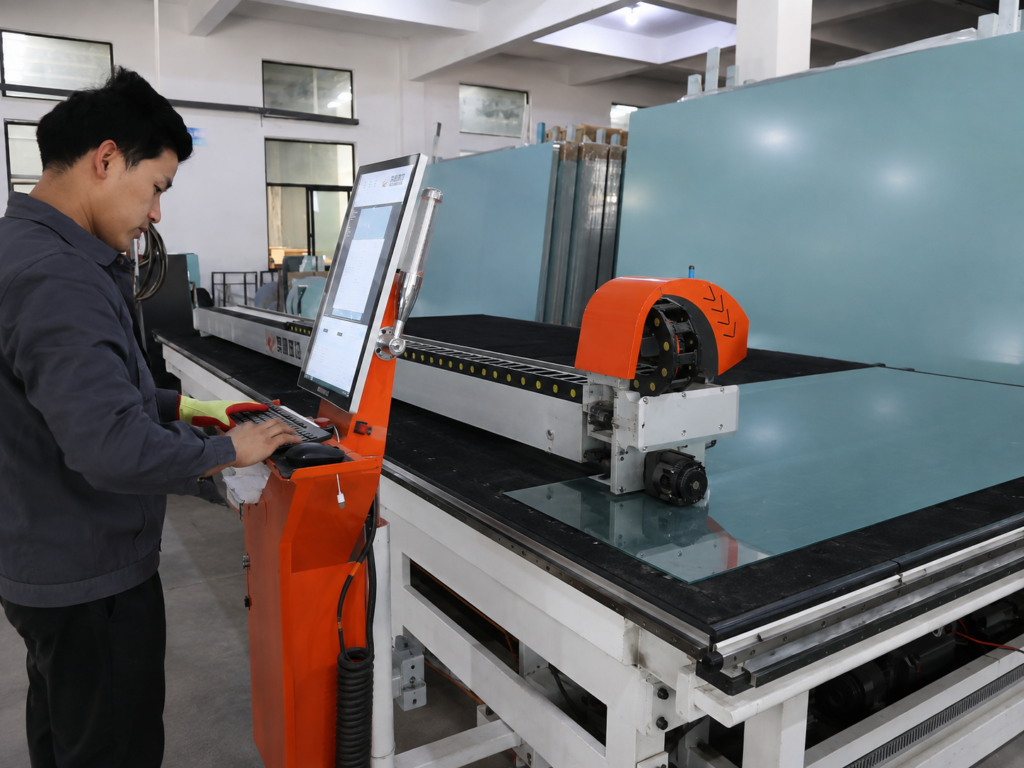
After inspection, the mirror glass is cut according to the confirmed technical drawing.
LED bathroom mirrors can be produced in many different shapes, including:
- Rectangle
- Round
- Oval
- Arch
- Capsule
- Irregular shapes
- Custom designs
Standard dimensions are suitable for retail and wholesale collections, while hotels, apartments and commercial projects may require customised sizes.
Computer-controlled cutting equipment helps improve dimensional accuracy and production efficiency. For bulk orders, the factory must maintain consistent dimensions because even small differences may affect frame assembly, installation or alignment across multiple bathrooms.
At this stage, the production team also checks the mirror’s length, width, diameter and overall shape against the approved drawing.
3. Edge Grinding and Polishing
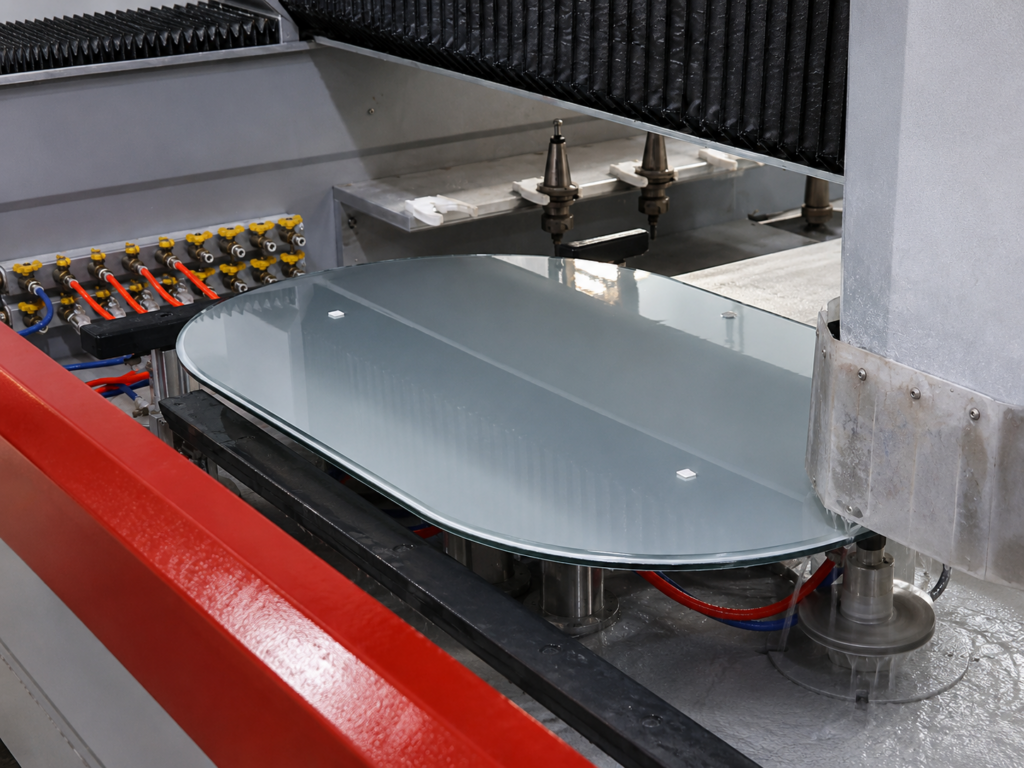
Newly cut glass has sharp and unfinished edges. It must be ground and polished before moving to the next production stage.
Edge processing serves several purposes:
- Removes sharp edges
- Reduces the risk of chipping
- Improves handling safety
- Creates a clean finished appearance
- Prepares the glass for further assembly
The required edge treatment depends on the mirror design. Frameless bathroom mirrors generally need clean, evenly polished edges because the glass edge remains visible after installation.
For framed LED mirrors, accurate edge processing helps the mirror fit correctly into the aluminium or metal frame.
After grinding and polishing, workers inspect the edges for chips, cracks, uneven areas and other visible defects.
4. Mirror Back Processing
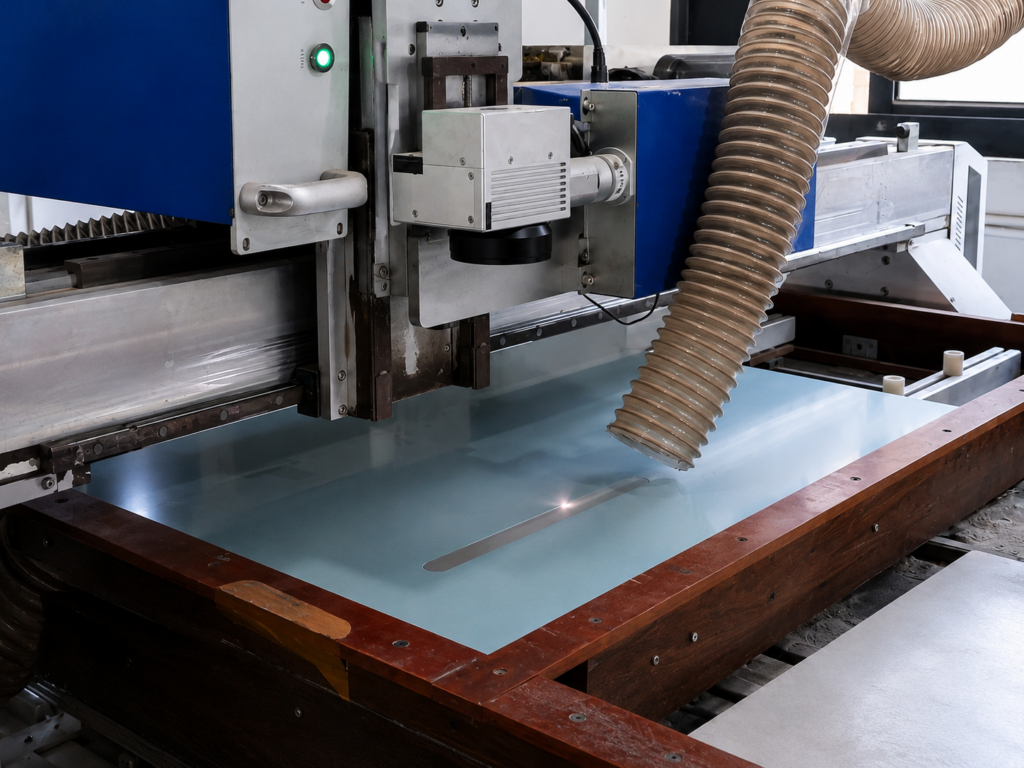
The lighting pattern and functional areas are then processed on the back of the mirror.
For illuminated mirrors, selected areas of the reflective coating may be removed by laser processing or other production methods. These transparent areas allow light from the LED strips to pass through the mirror.
Common processed areas include:
- Front-lighting bands
- Decorative lighting patterns
- Touch-control symbols
- Anti-fog indicators
- Clock or temperature-display windows
- Custom logos
The position and width of every lighting band must follow the approved drawing. Inconsistent processing may create uneven illumination or visible differences between mirrors in the same order.
For custom OEM and ODM projects, buyers can specify lighting patterns, logo positions and touch-button layouts according to their product design.
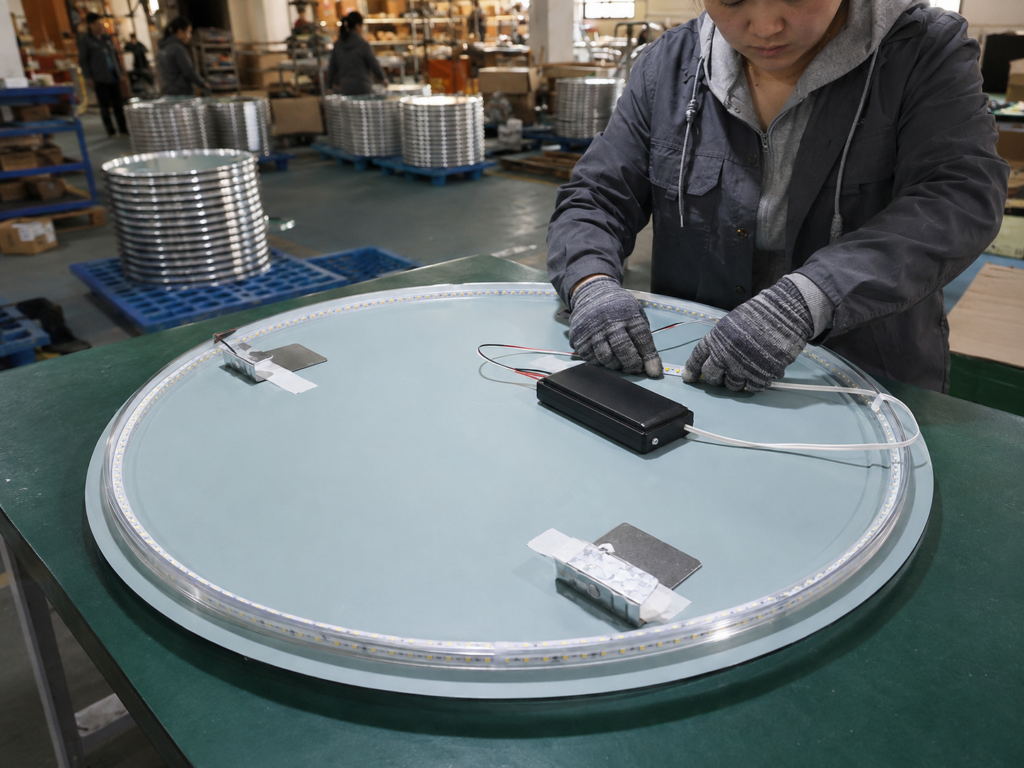
5. LED Strip Installation
LED strips are installed after the back-processing areas have been completed.
The lighting result depends on several factors:
- LED chip quality
- Number of LED chips per metre
- Distance between the LED strip and mirror
- Lighting-band design
- Driver performance
- Colour-temperature consistency
Popular lighting configurations include:
- Front-lit mirrors
- Backlit mirrors
- Front-lit and backlit mirrors
- Single-colour lighting
- Three-colour-temperature lighting
- Dimmable lighting
Common colour-temperature options include warm white, neutral white and cool white. Three-colour-temperature mirrors allow users to switch between different lighting tones.
The LED strip must be positioned evenly and fixed securely. Incorrect positioning can cause dark areas, visible light spots or inconsistent brightness.
6. Smart Function Assembly
Modern LED bathroom mirrors and LED mirror cabinets can include different smart functions according to the needs of the target market.
Common options include:
- Touch sensor
- Motion sensor
- Dimmable lighting
- Three-colour-temperature control
- Memory function
- Anti-fog function
- Digital clock
- Temperature display
- Bluetooth speaker
- Shaver socket
Not every product needs every function. Retailers and importers should select features based on their price range, customer preferences and local market requirements.
During assembly, workers connect the sensors, anti-fog pad, LED driver and other electrical components according to the product specification. Wires must be organised and secured properly to reduce the risk of loosening or damage during transportation.
For private-label projects, the button layout, function combination and operating logic can be customised before sample approval and mass production.
7. Frame, Back Panel and Electrical Assembly
Depending on the design, the mirror is assembled with an aluminium frame, metal back panel or wall-mounting structure.
The assembly process may include:
- Installing the aluminium frame
- Fixing the metal back panel
- Connecting the LED driver
- Securing electrical wires
- Installing mounting brackets
- Applying protective insulation
- Sealing relevant electrical areas
The frame and back panel must remain flat and firmly attached. A poorly assembled structure may cause the mirror to sit unevenly against the wall or create difficulties during installation.
Electrical connections should also be protected against moisture and accidental contact. Products for different markets may require different voltage, plug, wiring and compliance solutions.
HOMEKEMP can develop LED bathroom mirrors according to the certification and electrical requirements of the customer’s target market, including relevant CE, UL and ETL requirements where applicable.
8. Lighting, Function and Electrical Testing
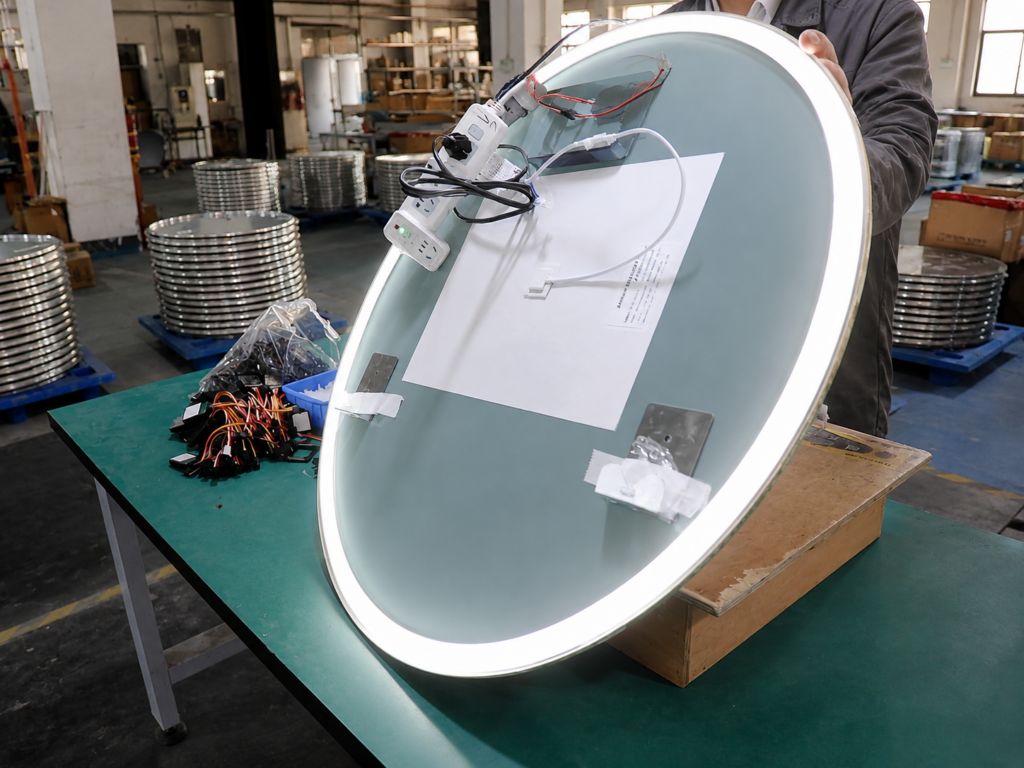
Every LED bathroom mirror should be tested before final inspection and packaging.
The testing process normally covers:
- Power-on test
- Lighting-uniformity inspection
- Colour-temperature test
- Dimming test
- Touch or motion-sensor test
- Memory-function test
- Anti-fog-function test
- Clock or Bluetooth-function test
- Electrical-safety inspection
Workers check whether the mirror switches on correctly and whether every function operates according to the approved specification.
Lighting should appear even across the illuminated area, without obvious dark sections, excessive brightness differences or flickering. For three-colour-temperature products, each lighting mode must switch correctly.
Depending on the product and order requirements, mirrors may also undergo an ageing test. Keeping the lighting and electrical system operating for a specified period helps identify unstable components before shipment.
This stage is particularly important for wholesalers and e-commerce sellers because electrical or functional failures can result in customer complaints, returns and higher after-sales costs.
9. Final Quality Inspection
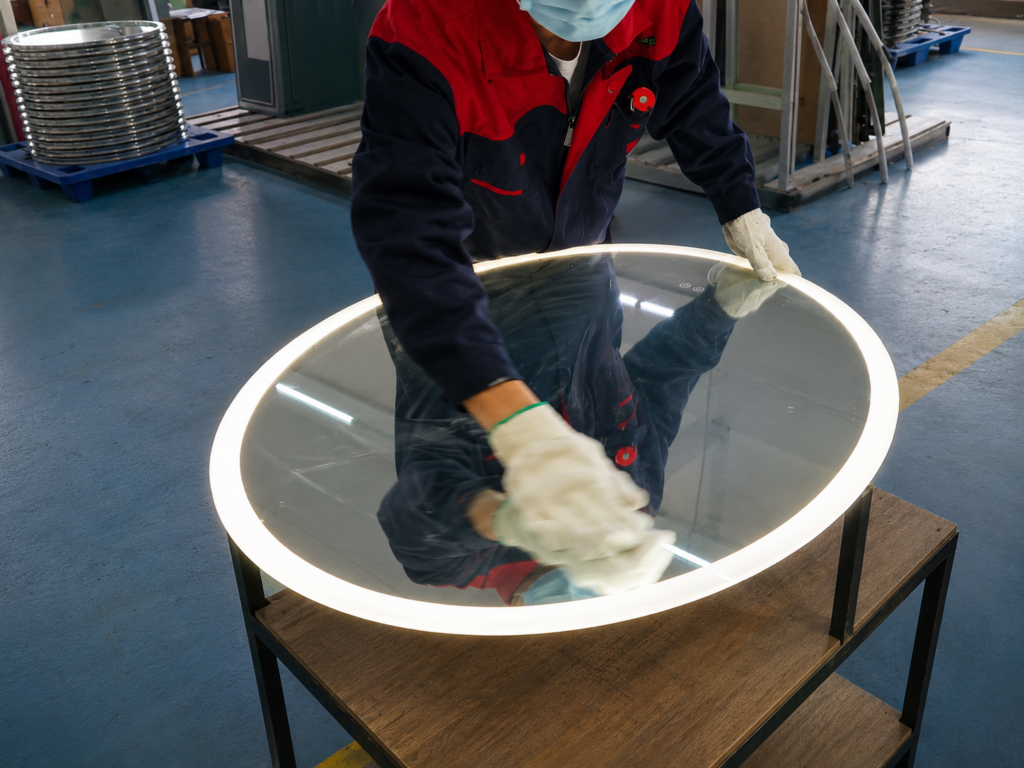
After functional testing, each mirror undergoes a final quality inspection.
The quality-control team checks:
- Mirror surface
- Reflection clarity
- Scratches, chips and black spots
- Product dimensions
- Frame condition
- Lighting consistency
- Touch-button position
- Smart functions
- Back-panel assembly
- Mounting hardware
- Labels and accessories
- Order specifications
The product should match the confirmed sample, drawing and purchase order.
For large projects or repeat wholesale orders, consistency is especially important. Mirrors installed in the same hotel, apartment building or retail collection should have matching dimensions, lighting colours and functional performance.
Inspection results can be recorded according to the customer’s quality requirements. Buyers may also arrange third-party inspections before shipment when necessary.
10. Protective Packaging and Drop Testing
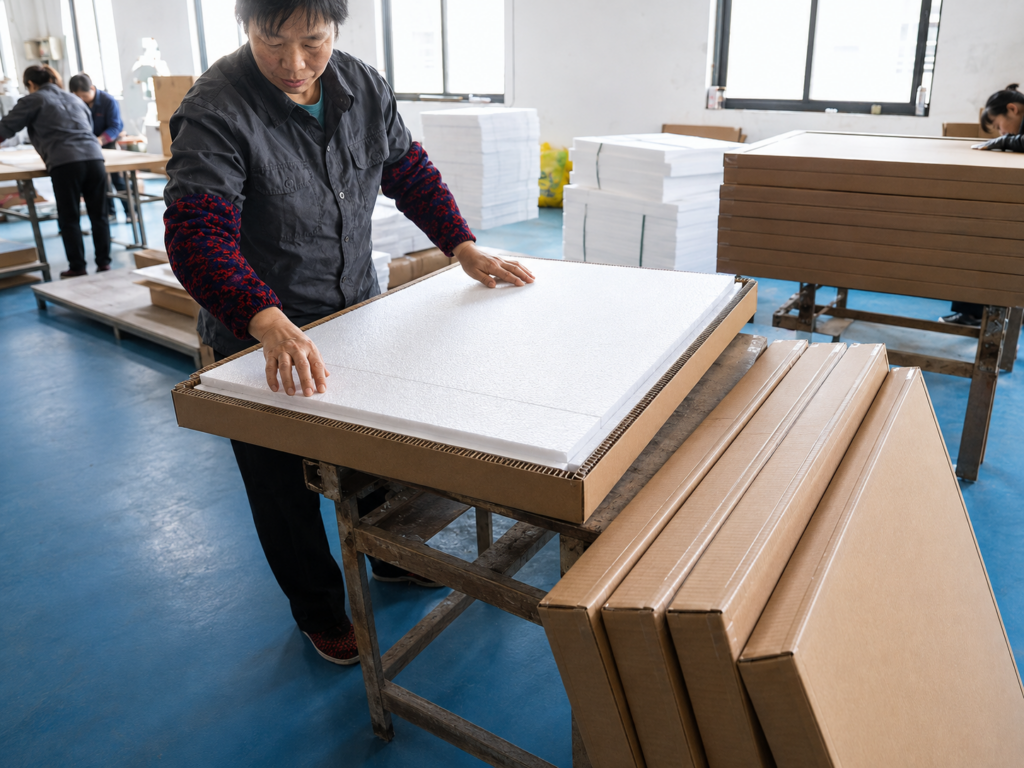
LED bathroom mirrors require stronger packaging than ordinary furniture because glass and electrical components can be damaged during handling and international transportation.
A typical protective packaging system may include:
- Surface-protection film
- Protective bags
- EPE foam
- Reinforced corner protection
- Honeycomb board
- Strong export cartons
- Wooden pallets when required
The packaging design depends on the mirror’s size, weight, frame structure and shipping method.
For e-commerce customers, packaging is especially important because individual cartons may pass through several warehouses and delivery stages before reaching the final customer. Packaging can be strengthened according to drop-test requirements to help reduce breakage and return rates.
Before bulk production, HOMEKEMP can evaluate packaging through sample packing and transportation tests. Custom cartons, private-label packaging, instruction manuals, barcodes and shipping labels are also available.
OEM and ODM LED Bathroom Mirror Solutions
Different markets have different requirements for mirror sizes, lighting functions, electrical standards and packaging. Working with an experienced manufacturer allows buyers to develop products suited to their own customers.
HOMEKEMP provides OEM and ODM support for:
- Custom sizes and shapes
- Front lighting and backlighting
- LED colour temperatures
- Smart-function combinations
- Aluminium-frame colours
- Touch-button layouts
- Custom logos
- Voltage and plug specifications
- Private-label packaging
- E-commerce packaging
- Project-specific mirror collections
Before mass production, samples can be developed for buyers to confirm dimensions, appearance, lighting, functions and packaging.
This approval process helps reduce misunderstandings and ensures that the final order meets the agreed requirements.
Why Manufacturing and Quality Control Matter
For wholesale and project buyers, product quality affects more than the appearance of the mirror.
A reliable manufacturing and inspection process can help:
- Maintain consistency across bulk orders
- Reduce electrical and functional failures
- Lower transportation breakage
- Reduce customer complaints and returns
- Improve installation efficiency
- Protect the buyer’s brand reputation
- Support long-term repeat orders
Price is an important purchasing factor, but it should not be evaluated separately from materials, electrical components, quality control and packaging.
Before choosing an LED bathroom mirror manufacturer, buyers should review production capability, sample quality, testing procedures, compliance experience and packaging solutions.
Conclusion
The LED bathroom mirror manufacturing process includes much more than cutting glass and adding an LED strip.
From incoming-material inspection and glass processing to electrical assembly, functional testing, final quality control and protective packaging, every stage contributes to the safety, appearance and long-term reliability of the finished product.
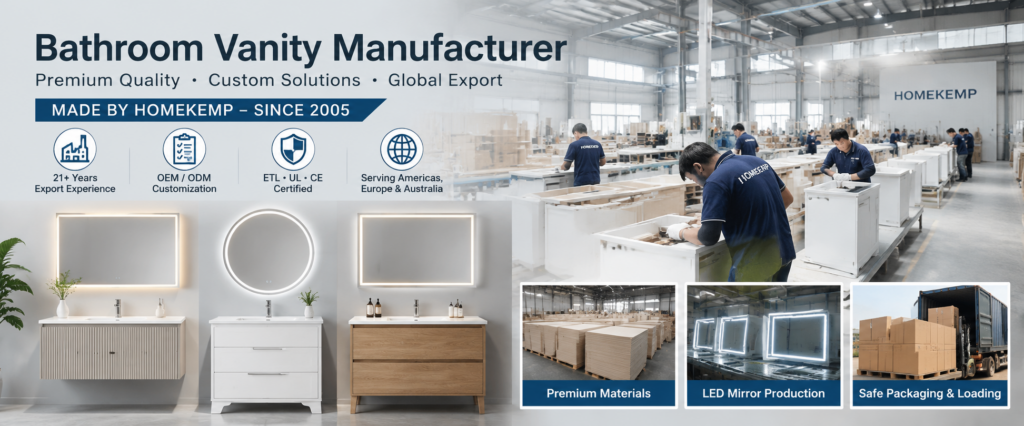
At the HOMEKEMP bathroom mirror factory, we have manufactured and exported bathroom mirrors and bathroom cabinets since 2005.We support wholesalers, distributors, retailers, e-commerce businesses and project buyers across Europe, the Americas and Australia with OEM and ODM production solutions.
Looking for a reliable LED bathroom mirror manufacturer for your next wholesale, retail or project order?
Contact HOMEKEMP to request our latest catalogue, customisation options and wholesale pricing.