
Introduction
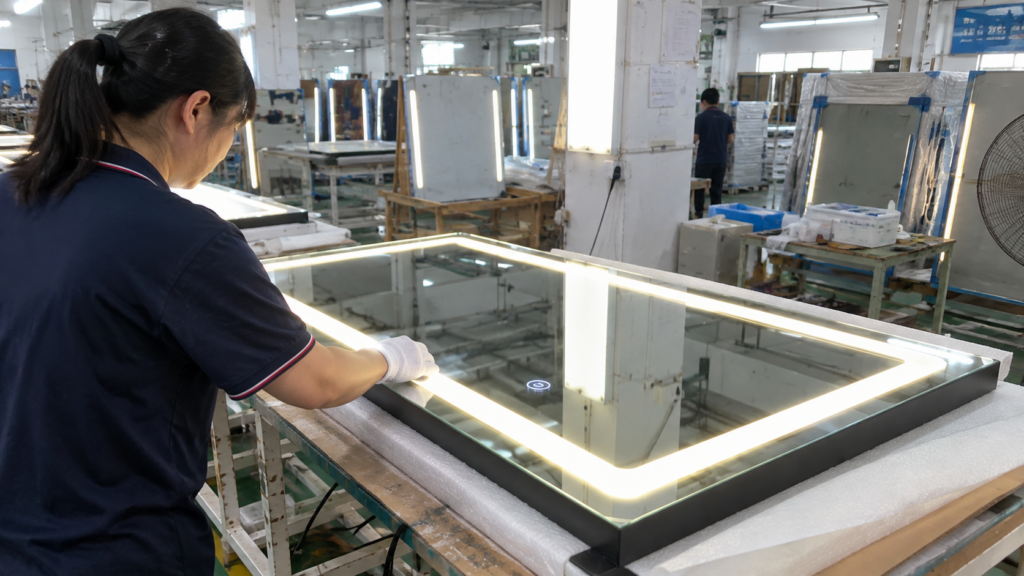
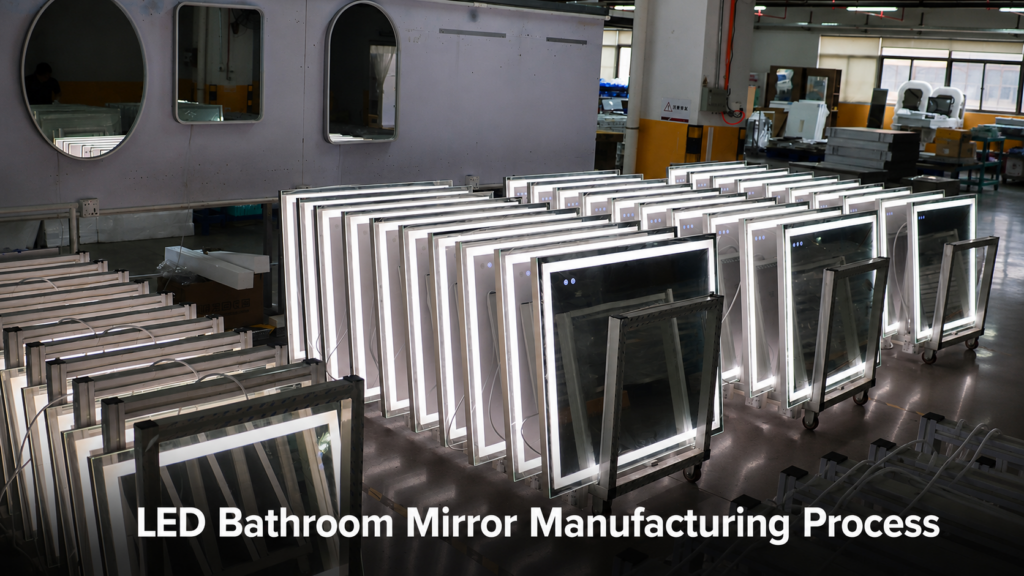
LED bathroom mirrors have developed from simple illuminated mirrors into products with adjustable lighting, anti-fog systems, touch controls, memory settings and other smart functions.To understand the production behind these functions, see how LED bathroom mirrors are made from glass processing to final testing and packaging.
More features, however, do not automatically make a mirror better.
For wholesalers, bathroom retailers, e-commerce brands, hotel suppliers and project buyers, the right configuration depends on the target market, retail price, installation method and customer expectations. A practical specification for a mid-range retail collection may be very different from the one required for a hotel project or premium smart-home range.
This guide explains the most common LED bathroom mirror features, how they work and what B2B buyers should confirm before placing a bulk order.
1. Front-Lit, Backlit and Dual-Lit LED Mirrors
Lighting structure is one of the first decisions when developing an LED bathroom mirror collection.
Front-Lit LED Bathroom Mirrors
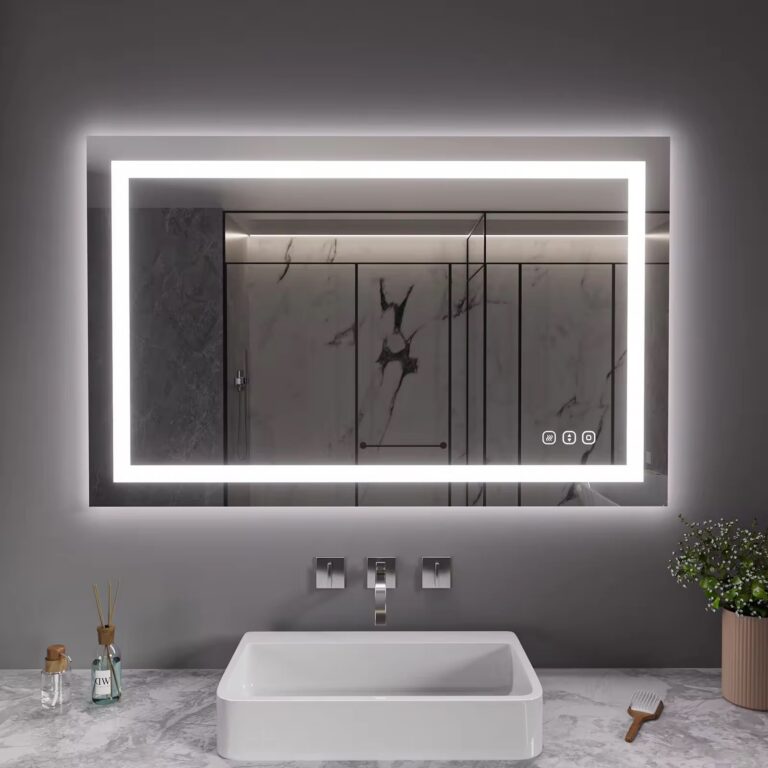
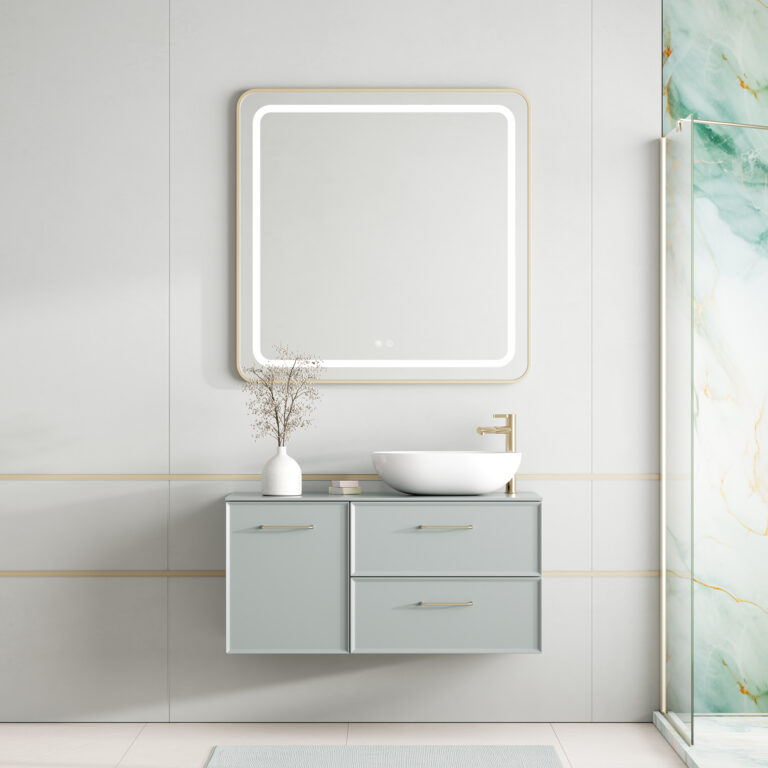
A front-lit mirror directs light through a frosted or transparent band on the front of the glass.
Because more light travels towards the user, front lighting is suitable for daily grooming, shaving and makeup. It is commonly used in residential bathrooms, hotel rooms and illuminated vanity mirror collections.
Buyers should check:
- Lighting uniformity around the mirror
- Width and position of the frosted light band
- Visible LED spots or dark areas
- Brightness at normal viewing distance
- Consistency between units in the same order
Backlit LED Bathroom Mirrors
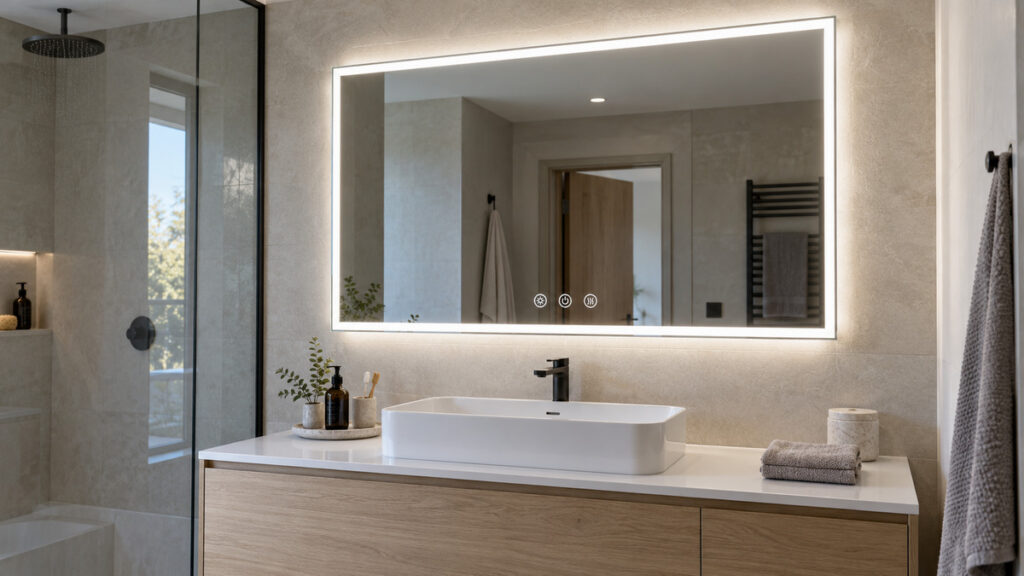
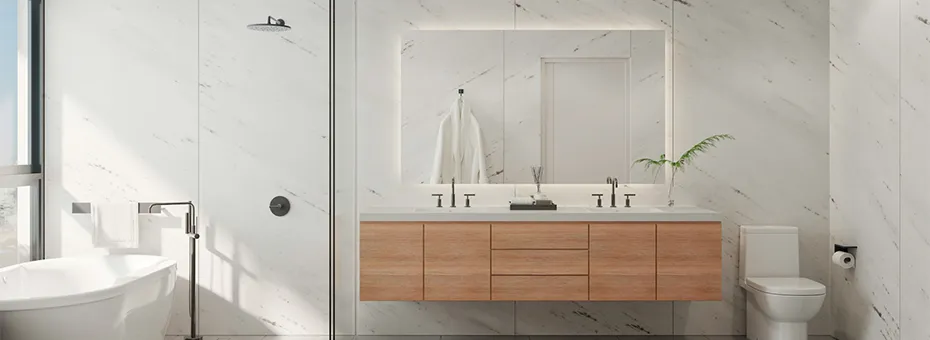
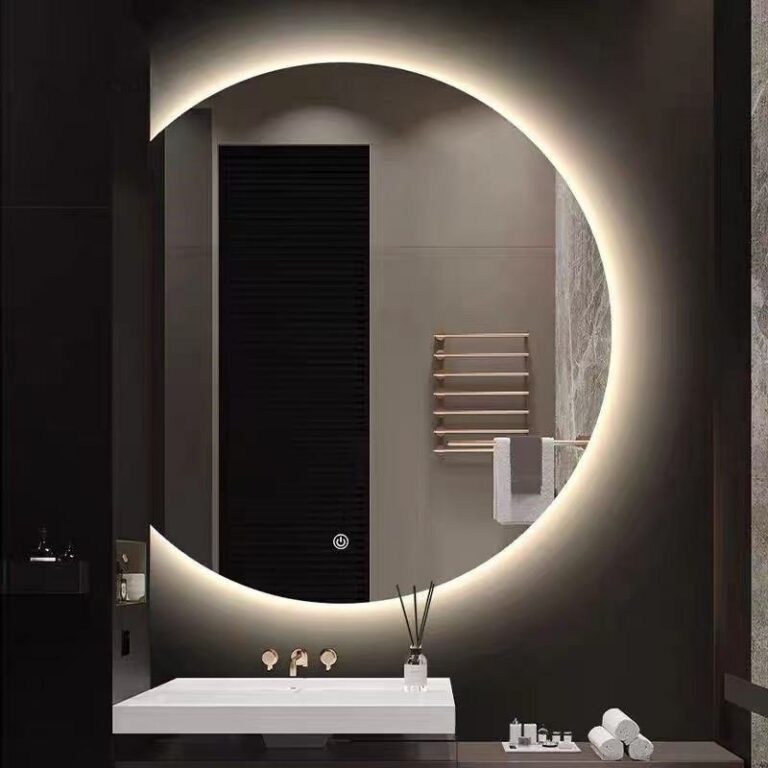
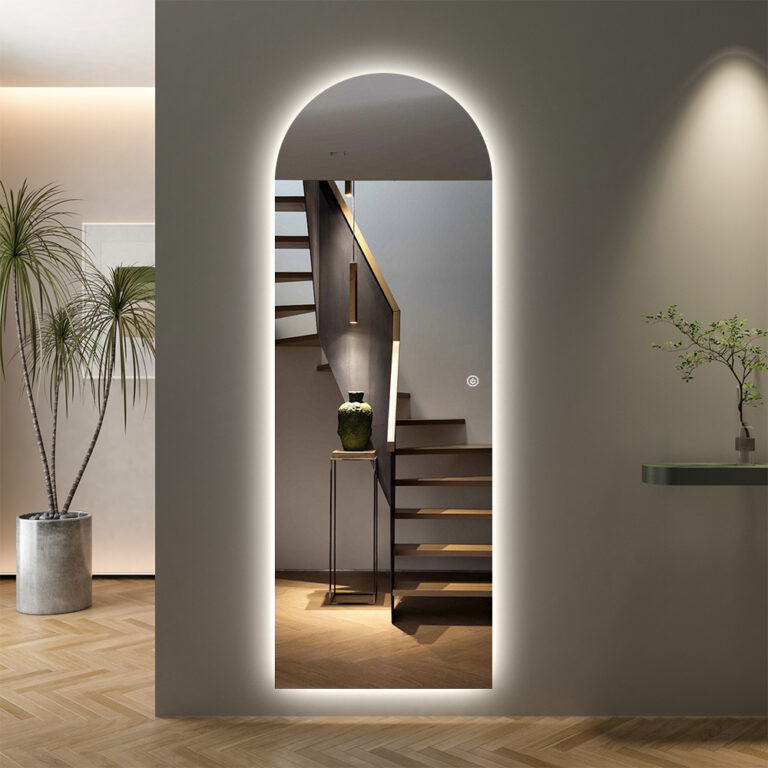
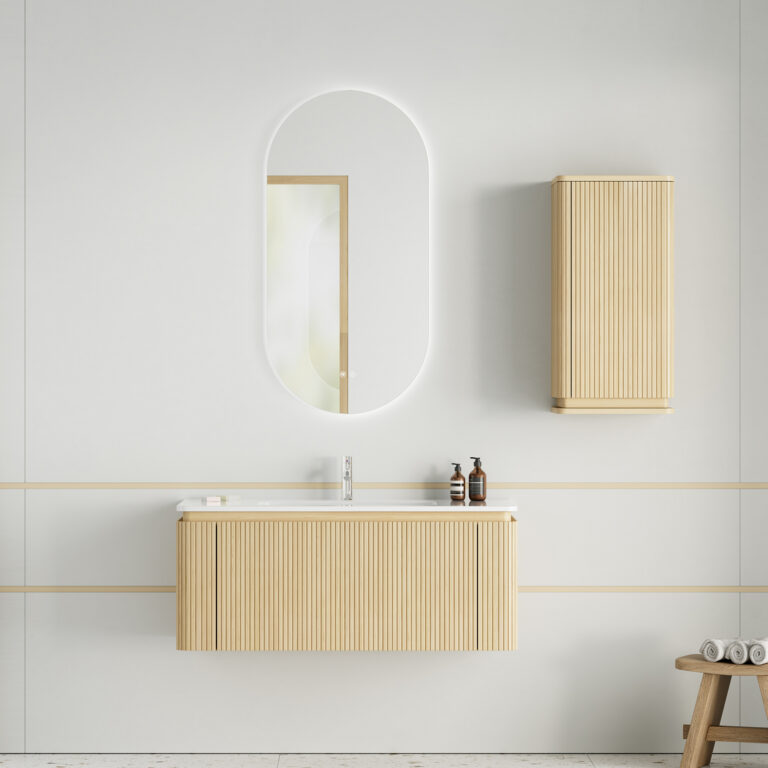
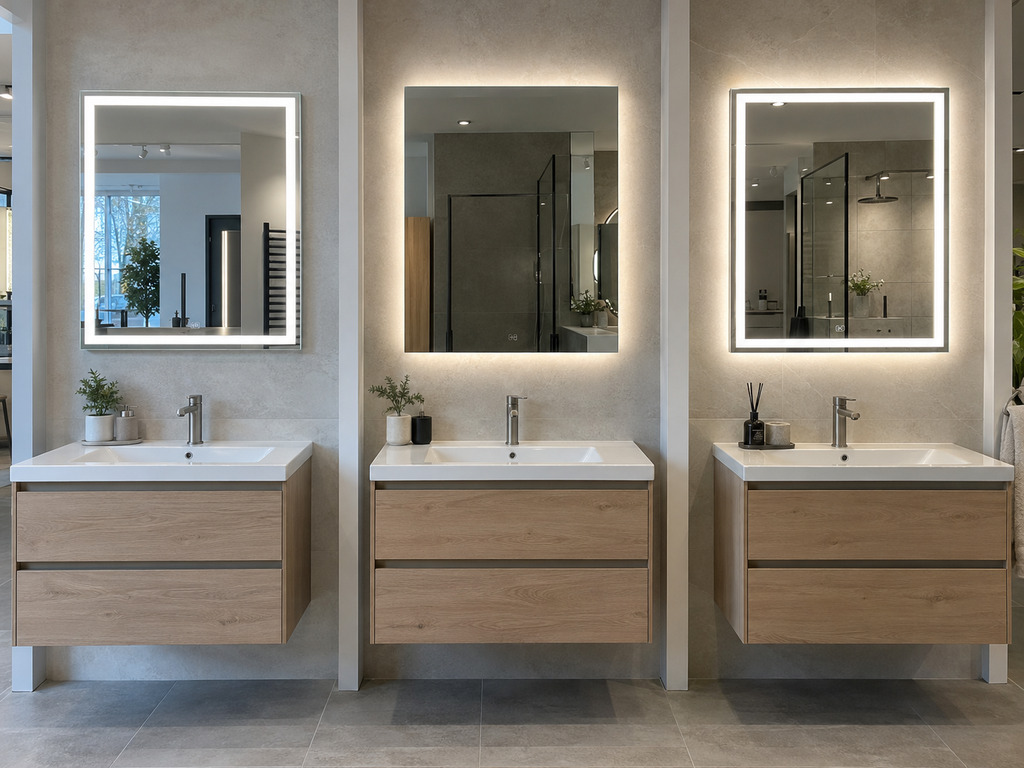
A backlit bathroom mirror projects light from behind the mirror towards the wall. This creates a soft halo effect and gives the bathroom a clean, modern appearance.
Backlit mirrors are widely used in contemporary residential projects, hotels, apartments and decorative retail ranges. The effect depends partly on the installation surface and the distance between the mirror and the wall.
Backlighting is generally more decorative than direct front lighting, so buyers should not assume every backlit mirror will provide enough facial illumination on its own.
Front-Lit and Backlit Mirrors
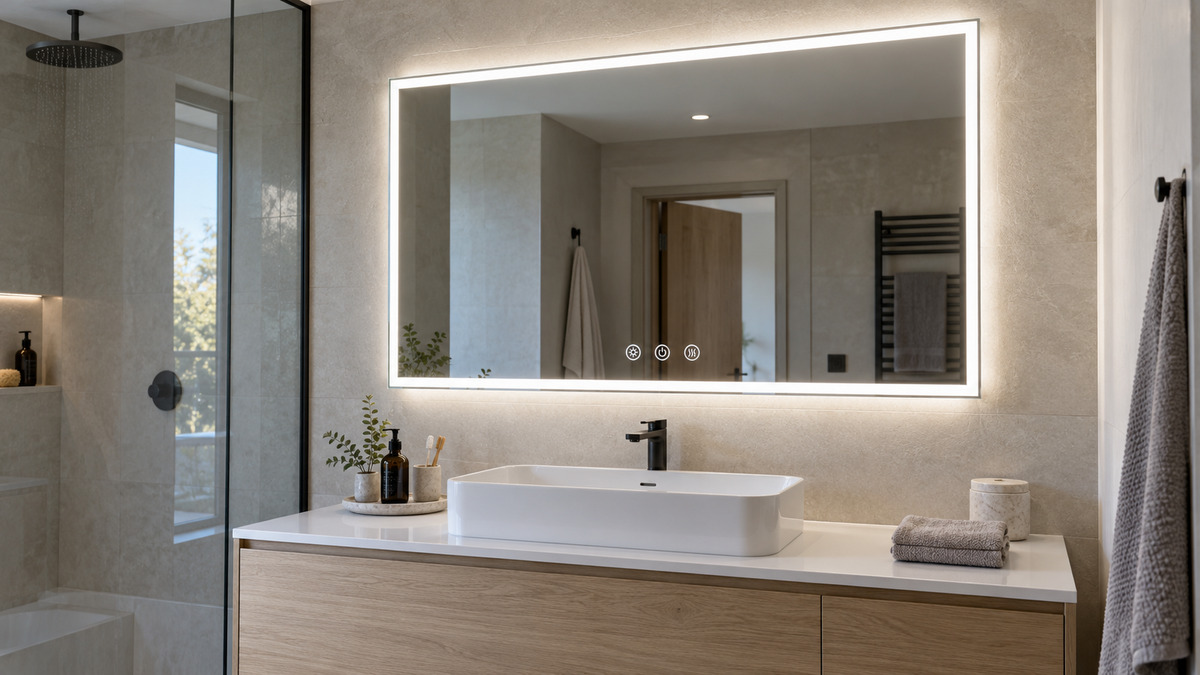
Dual-lit mirrors combine front lighting with a backlit halo. This configuration offers stronger task lighting while maintaining a premium ambient effect.
It is often selected for higher-value retail collections and hotel projects, although it requires more LED components and may have a higher production cost than a single-lighting design.
The best option is not always the one with the most light. Buyers should select the lighting structure according to the intended use, target price and bathroom environment.
2. Dimmable LED Lighting
Dimmable lighting allows users to adjust brightness instead of operating the mirror at one fixed level.
Most dimmable LED bathroom mirrors use a touch button. A short press switches the light on or off, while a long press adjusts the brightness. Depending on the controller, the adjustment may be continuous or divided into preset levels.
Smooth dimming is useful because bathroom lighting requirements change throughout the day. Bright light may be preferred for grooming, while softer light is more comfortable during the evening.
Before approving a sample, wholesale buyers should check:
- Whether dimming is smooth
- The minimum and maximum brightness
- Whether the light flickers at low brightness
- How quickly the brightness changes
- Whether the operating method is easy to understand
- Whether all samples respond consistently
The control instructions should also be clearly explained in the user manual, particularly for e-commerce orders where unclear operation can lead to avoidable customer complaints.
3. Three Colour Temperature Lighting
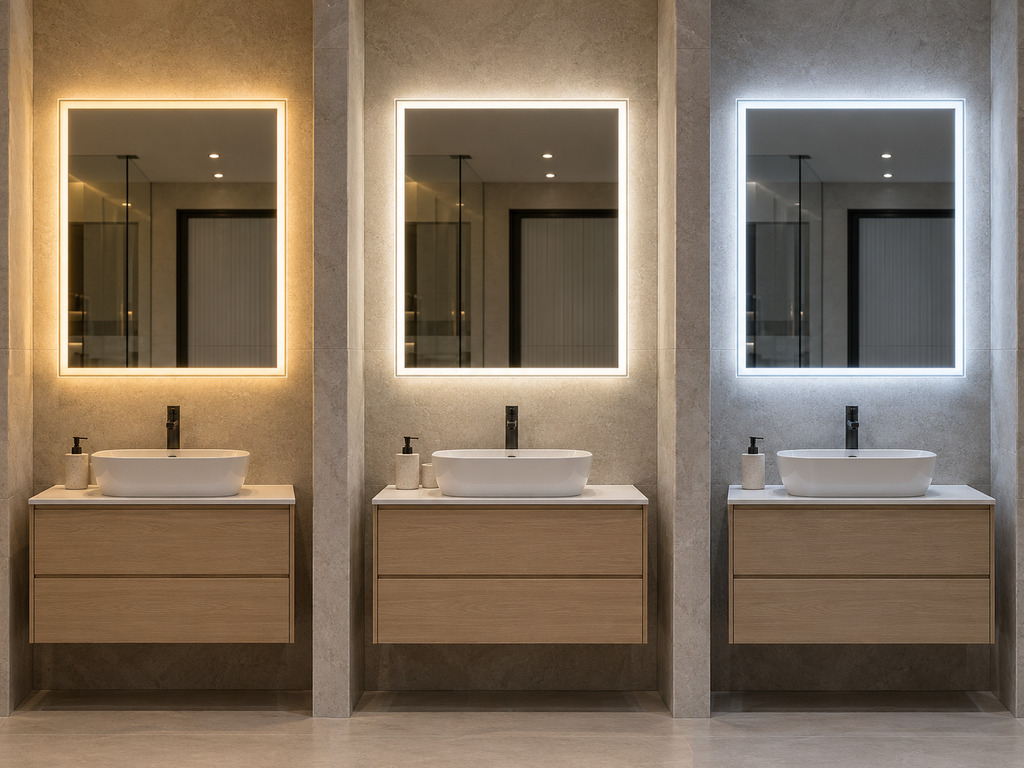
Three-colour-temperature lighting, often described as 3CCT, allows users to change the appearance of the light.
Common options include:
- Warm white: approximately 3000K
- Neutral white: approximately 4000K
- Cool white: approximately 6000K
Warm white creates a softer atmosphere. Neutral white is suitable for everyday bathroom use, while cool white provides a brighter and cleaner appearance.
The exact colour-temperature range can be adjusted according to the selected LED strip and target market. Some buyers prefer 3000K, 4000K and 6000K, while others specify slightly different values.
For bulk orders, buyers should pay attention to colour consistency. Mirrors installed in the same hotel, apartment project or showroom should not display noticeably different lighting tones.
When reviewing samples, compare several units together rather than checking only one mirror.
4. Anti-Fog and Demister Functions
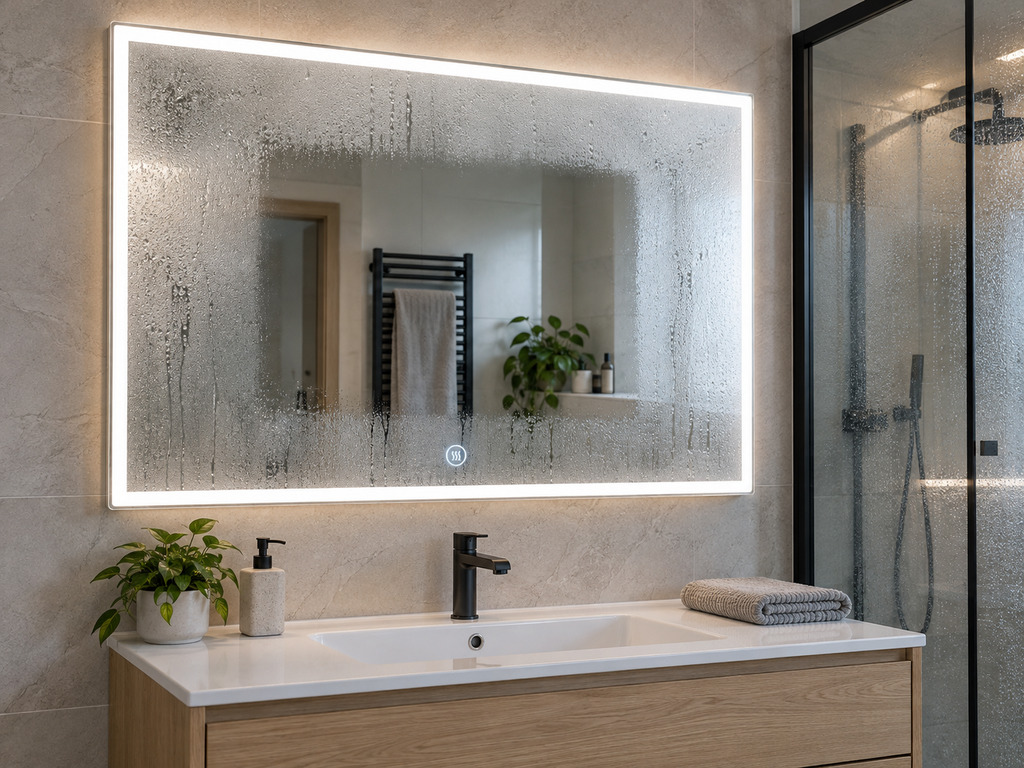
An anti-fog bathroom mirror uses a heated demister pad on the back of the glass. When activated, it warms a selected area and helps keep the mirror clear after a hot shower.
Anti-fog is one of the most practical LED bathroom mirror features for humid bathrooms, hotels and residential projects. However, the heating pad usually covers only part of the mirror rather than the entire glass surface.
Buyers should confirm:
- Size and position of the anti-fog pad
- Heating performance
- Time required to clear the mirror
- Whether the demister has a separate control
- Power consumption
- Automatic shut-off requirements
- Electrical specification for the destination market
For entry-level ranges, the anti-fog function may be connected to the main light. Mid-range and premium mirrors often use a separate touch button so the user can operate the demister only when needed.
An automatic shut-off option may also help reduce unnecessary energy use and prevent the heating pad from remaining on for long periods.
5. Memory Function
A memory function allows the mirror to remember the previous lighting setting after it has been switched off.
Depending on the controller, the mirror may remember:
- Selected brightness
- Colour temperature
- Light mode
- Previous on/off setting
This is a small feature, but it improves daily usability because users do not need to reset the mirror every time.
Wholesale buyers should confirm exactly what the controller remembers and under what conditions. Some mirrors retain settings after being turned off through the touch button but reset after the main wall power is disconnected.
The operating logic should be confirmed during sample approval and described accurately in product listings and instruction manuals.
6. Touch Sensors and Button Layout
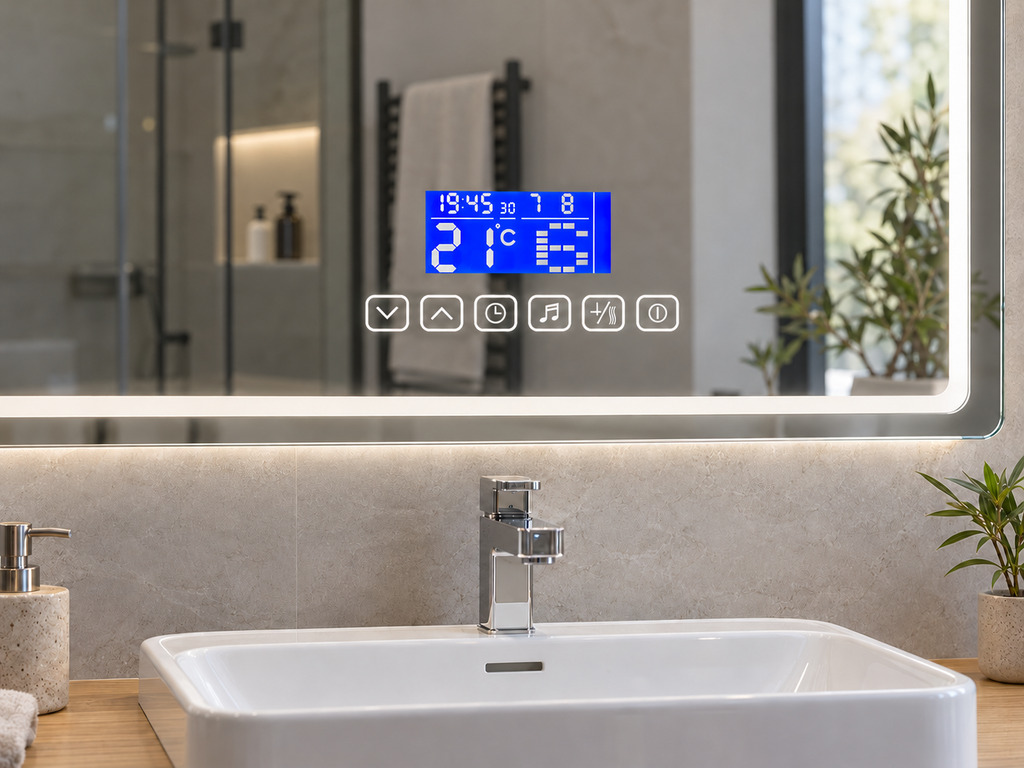
Touch controls are widely used on smart LED bathroom mirrors because they create a clean appearance and are easy to integrate into the glass.
Individual buttons can control:
- Lighting
- Dimming
- Colour temperature
- Anti-fog
- Bluetooth
- Clock or other functions
Button quantity and layout should remain simple. Adding too many symbols can make the mirror harder to operate and increase the number of components that require testing.
Important points for buyers include:
- Sensor response
- Button position
- Symbol brightness
- Visibility when the mirror is off
- Operation with damp fingers
- Consistency across the production batch
- Whether the indicator light remains on during standby
The icons, button positions and control logic can be customised for private-label and OEM LED mirror projects.
7. Motion and Infrared Sensors
Motion sensors allow users to control the mirror without touching the glass. A hand movement near the sensor can switch the light on or off.
This feature may be suitable for:
- Hotel bathrooms
- High-end residential projects
- Accessible bathrooms
- Premium retail collections
- Bathrooms where reducing fingerprints is important
Sensor position matters. It should be easy to reach without being activated accidentally when somebody walks past the mirror.
Buyers should test the sensing distance, response speed and installation position. The sensor must also function reliably under the intended lighting and bathroom conditions.
Touch controls remain more familiar to many consumers, so motion sensors should be selected according to the target customer rather than added to every model.
8. Bluetooth Speakers
Bluetooth bathroom mirrors allow users to connect a phone or another compatible device and play music or audio through integrated speakers.
Bluetooth can help differentiate a premium smart mirror range, but it also adds electronic components and increases testing requirements.
Before ordering, buyers should review:
- Connection stability
- Pairing process
- Speaker clarity
- Volume range
- Device compatibility
- Standby behaviour
- Control method
- Relevant electrical or wireless compliance requirements
Sound quality should be evaluated realistically. A bathroom mirror speaker is normally designed for convenient daily listening rather than replacing a dedicated home audio system.
Bluetooth is more suitable for premium retail collections and smart-home products than basic project specifications where simple operation and cost control are priorities.
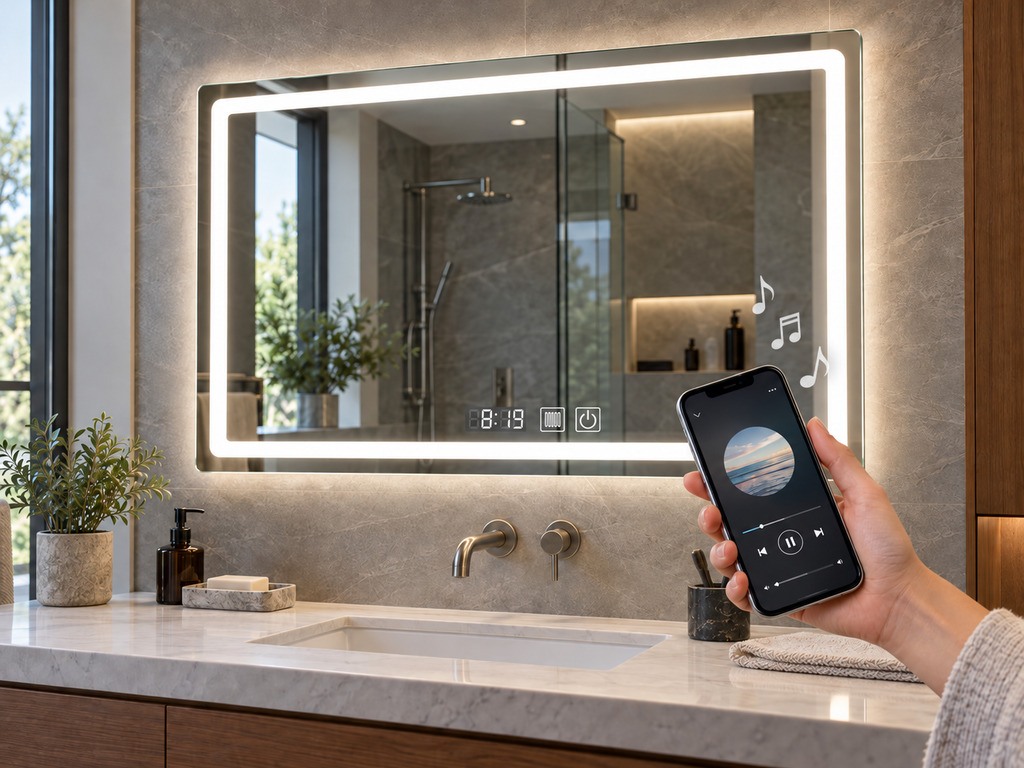
9. Digital Clock and Temperature Display
A digital display can show the time, room temperature or both. It is usually positioned behind a transparent area of the mirror coating.
This feature is often included in smart LED mirrors for modern residential and hospitality markets.
Buyers should check:
- Display position
- Number size and visibility
- Brightness
- Time-setting method
- Temperature unit
- Accuracy
- Standby display behaviour
- Whether settings are retained after power interruption
For European markets, Celsius is normally required. Fahrenheit may be needed for the United States. Some controllers support both units, while others must be specified before production.
A clock display can add value, but it also makes the product instructions and quality inspection more complex. It should be included only when it fits the intended customer group.
10. Light Quality, CRI and Lighting Uniformity
A long feature list does not compensate for poor lighting.
Colour Rendering Index, or CRI, describes how naturally colours appear under a light source. Buyers developing mirrors for grooming, makeup or premium bathroom ranges often request higher colour-rendering performance.
In addition to CRI, the following factors affect lighting quality:
- LED density
- Light diffusion
- Brightness
- Colour-temperature consistency
- Driver stability
- Distance between the LED strip and glass
- Frosted-band design
During sample evaluation, look for visible light spots, dark sections, colour differences and flickering. These problems are often more noticeable in photographs, videos and showroom displays than they first appear during a quick inspection.
For repeat orders, the manufacturer should also maintain consistent LED specifications so that later production does not look significantly different from the approved sample.Buyers preparing a bulk order can also review our guide on how to evaluate LED bathroom mirror quality before approving mass production.
11. Safety and Installation Options
LED bathroom mirrors may be supplied for hardwired installation, plug-in installation or both, depending on the market and product design.
Specification details may include:
- Input voltage
- Plug type
- Cable length
- Driver specification
- Wiring position
- Mounting brackets
- Vertical or horizontal installation
- Moisture protection
- Safety backing
- Local certification requirements
Products sold in Europe, North America and Australia may require different electrical components, labels, plugs and compliance documentation.
The required market should therefore be confirmed before sample production. Buyers should not assume that one electrical configuration is suitable for every country.
HOMEKEMP can develop products according to the electrical and certification requirements of the target market, including relevant CE, UL and ETL requirements where applicable.For more guidance on sizes, shapes and installation requirements, read How to Choose the Right Bathroom Mirror for Your Project.
12. Which Features Should Wholesale Buyers Choose?
There is no single ideal configuration for every LED bathroom mirror range.
A practical entry-level model may include:
- Single-colour LED lighting
- Touch control
- Basic dimming
- Backlit or front-lit construction
A mid-range retail model may include:
- Three colour temperatures
- Stepless dimming
- Anti-fog
- Memory function
- Separate touch controls
A premium smart mirror may include:
- Front and backlighting
- Anti-fog
- Memory function
- Motion sensor
- Digital clock
- Bluetooth speaker
Hotel and apartment projects often prioritise reliable lighting, anti-fog performance, simple controls and easy installation. E-commerce sellers may place more emphasis on clear feature differentiation, retail packaging and reducing return rates.
Before choosing the final configuration, buyers should consider:
- Target customer
- Expected retail price
- Local market preferences
- Installation method
- Certification requirements
- Warranty and after-sales risk
- Packaging requirements
- Long-term availability of electronic components
A well-selected combination of useful features normally performs better than a complicated mirror with functions the customer rarely uses.
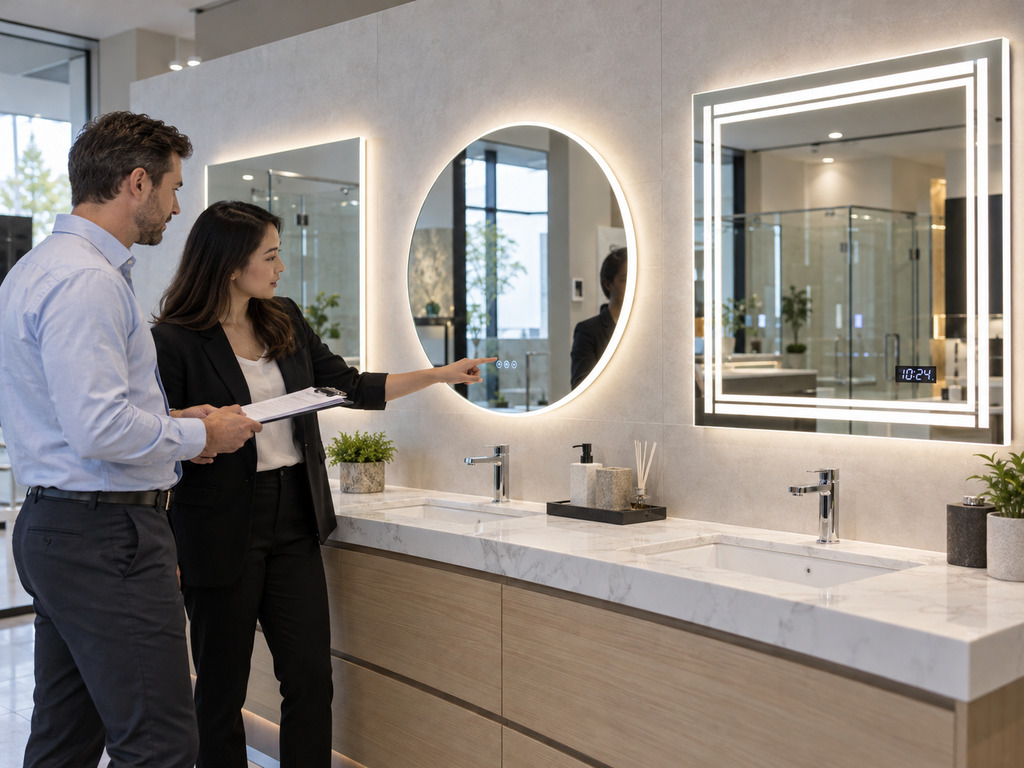
OEM and ODM LED Bathroom Mirror Options
For wholesalers, retailers, distributors and project buyers, a custom LED bathroom mirror can be developed to match the target market, product positioning and installation requirements.
HOMEKEMP supports OEM and ODM customisation for:
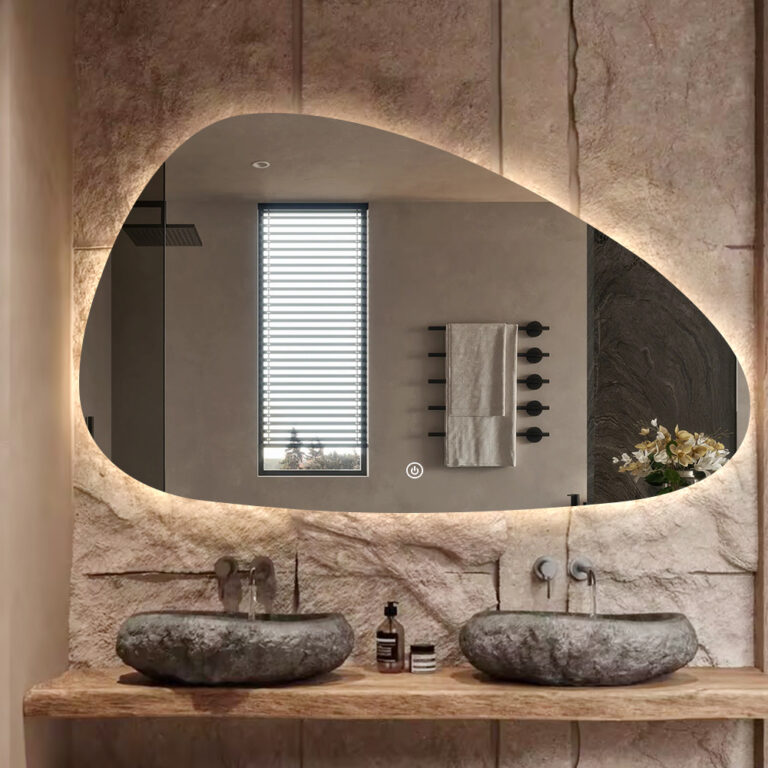
- Mirror dimensions and shapes
- Front-lit, backlit and dual-lit designs
- LED brightness and colour temperature
- Dimming and memory functions
- Anti-fog pad size
- Touch-button layout
- Motion sensors
- Bluetooth speakers
- Clock and temperature displays
- Aluminium-frame colours
- Voltage, plugs and wiring
- Logos and private labels
- Instruction manuals
- Barcodes and shipping labels
- Retail and e-commerce packaging
Samples can be prepared before mass production so buyers can confirm the appearance, lighting, control logic, functions and packaging.
This approval stage is particularly important for smart mirrors because two products may list the same functions but provide a very different user experience.
Conclusion
LED bathroom mirror features should be selected according to the market, not simply added to create a longer specification list.
Lighting quality, dimming, colour temperature, anti-fog performance and easy operation are usually more important than adding every available smart function. Bluetooth, digital displays and motion sensors can add value when they suit the intended price level and customer group.
For wholesale and project orders, buyers should confirm the complete function specification during sample development and test the approved configuration before mass production.
As an experienced bathroom mirror factory, HOMEKEMP supplies custom LED bathroom mirrors for distributors, bathroom retailers, e-commerce brands, hotels, apartments and commercial projects across Europe, the Americas and Australia.
We provide B2B wholesale and project supply only, with a standard minimum order quantity of 20 pieces. Individual retail orders are not supplied.
Looking for an LED bathroom mirror manufacturer for your next wholesale or project order?
Contact HOMEKEMP to request our latest catalogue, available smart functions, customisation options and wholesale pricing.