How Bathroom Cabinets Are Made: 12-Step Manufacturing Process and Quality Control
Introduction
A bathroom cabinet may look like a straightforward combination of panels, drawers, doors and hardware. In reality, producing a reliable cabinet requires careful control of materials, dimensions, surface finishing, assembly, hardware performance and packaging.
For wholesalers, bathroom retailers, distributors, e-commerce brands and project buyers, understanding the bathroom cabinet manufacturing process makes it easier to evaluate suppliers and compare products beyond their appearance and price.
A professional bathroom cabinet manufacturer must ensure that each unit in a bulk order has consistent dimensions, matching colours, properly aligned drawers and doors, secure mounting components and sufficient protection for international transportation.
This guide explains how bathroom cabinets are manufactured and inspected, from specification confirmation and raw-material preparation to final quality control and export packaging.
1. Product Design and Specification Confirmation
Bathroom cabinet production begins with a confirmed product specification.
Before preparing materials, the manufacturer and buyer should agree on:
- Cabinet dimensions
- Wall-mounted or freestanding construction
- Cabinet material
- Door and drawer configuration
- Surface colour and finish
- Basin or countertop type
- Handle or handleless design
- Drawer slides and hinges
- Plumbing-opening position
- Installation method
- Packaging requirements
- Order quantity and delivery schedule
For custom bathroom cabinet projects, technical drawings are normally prepared to show the external dimensions, internal structure, drawer layout and installation details.
The drawing should match the approved quotation, sample and purchase order. Small dimensional differences can create installation problems, especially when many cabinets are being supplied for the same hotel, apartment building or commercial project.
Buyers should also confirm whether the cabinet will be supplied with a basin, countertop, mirror, side cabinet or other matching components.
Once the sample and technical drawing have been approved, they become the main references for mass production and quality inspection.
2. Raw-Material Selection and Incoming Inspection
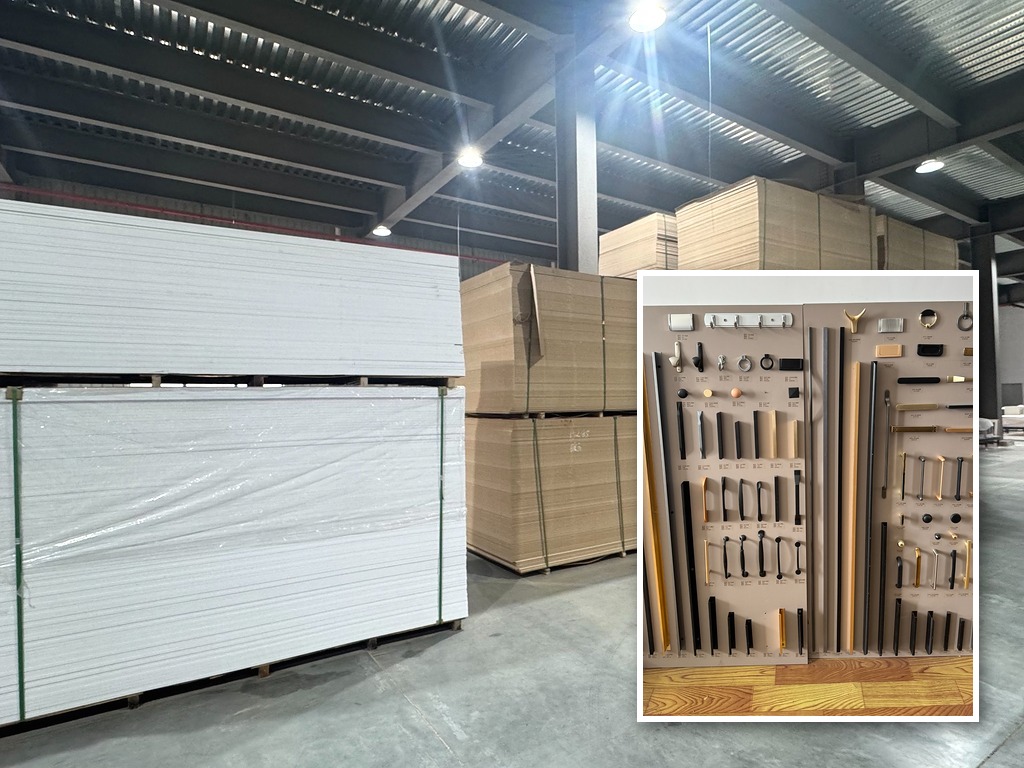
Bathroom cabinets can be manufactured from different materials according to the target market, product positioning and expected bathroom environment.
Common cabinet materials include:
- Plywood
- MDF
- Particleboard
- Solid wood
- PVC board
- Aluminium
- Stainless steel
Each material has different characteristics relating to cost, weight, strength, moisture resistance and surface-finishing options.
Plywood is widely used for mid-range and premium bathroom cabinets because of its structural stability. MDF provides a smooth surface for painted finishes, while PVC board is suitable for product ranges where water resistance is a priority.
Before production, incoming panels should be inspected for:
- Correct thickness
- Moisture level
- Surface condition
- Warping
- Cracks or damage
- Colour consistency
- Material specification
- Batch consistency
Hardware and accessories should also be checked. These can include hinges, drawer slides, handles, mounting brackets, adjustable feet, screws and other connecting components.
Consistent material sourcing is important for repeat orders. Changes in panels, paint, veneer or hardware can cause later production batches to look or perform differently from the approved sample.
3. Panel Cutting
After incoming inspection, large boards are cut into the individual cabinet components.
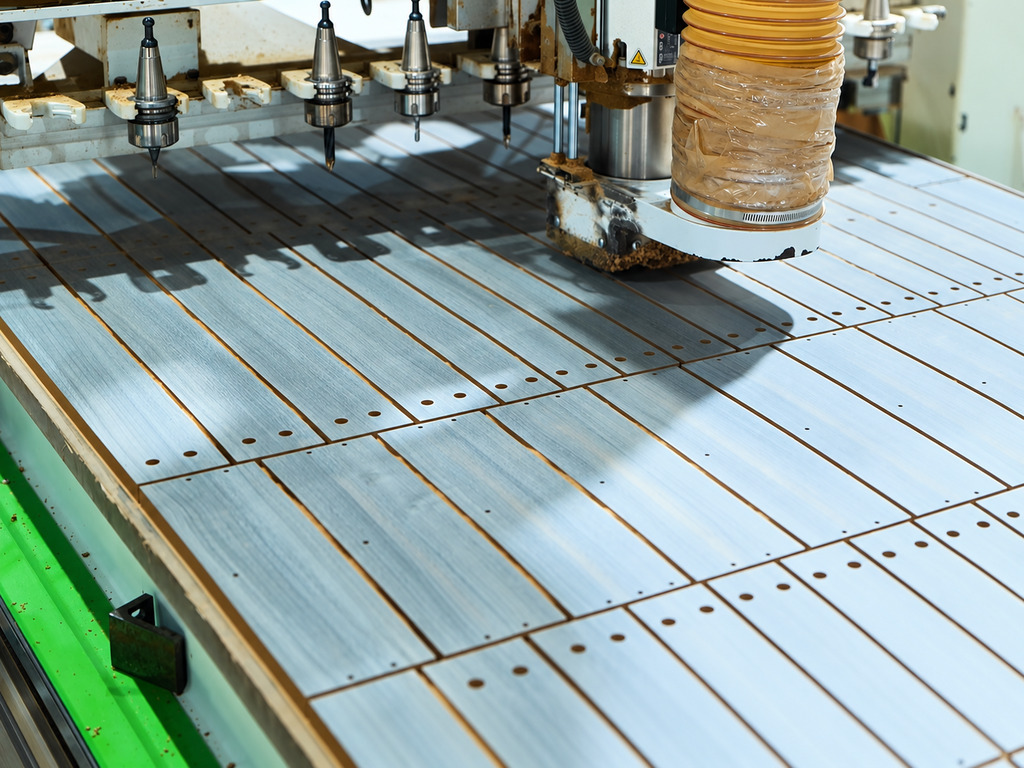
These parts may include:
- Side panels
- Bottom panels
- Top support panels
- Back panels
- Doors
- Drawer fronts
- Drawer side panels
- Shelves
- Internal dividers
Computer-controlled cutting equipment helps improve dimensional accuracy and production efficiency.
Accurate cutting is essential because even a small error can affect cabinet assembly, drawer alignment, countertop fitting and installation.
After cutting, the panels are checked for:
- Correct length and width
- Clean cutting edges
- Surface scratches
- Edge chipping
- Correct panel quantity
- Consistency between matching components
Components should be labelled or organised according to the model and order. This reduces the risk of panels from different cabinet designs, colours or sizes being mixed during production.
4. CNC Drilling and Machining
The cut panels then move to CNC drilling and machining.
This process creates the holes, openings and fixing points required for assembly and installation.
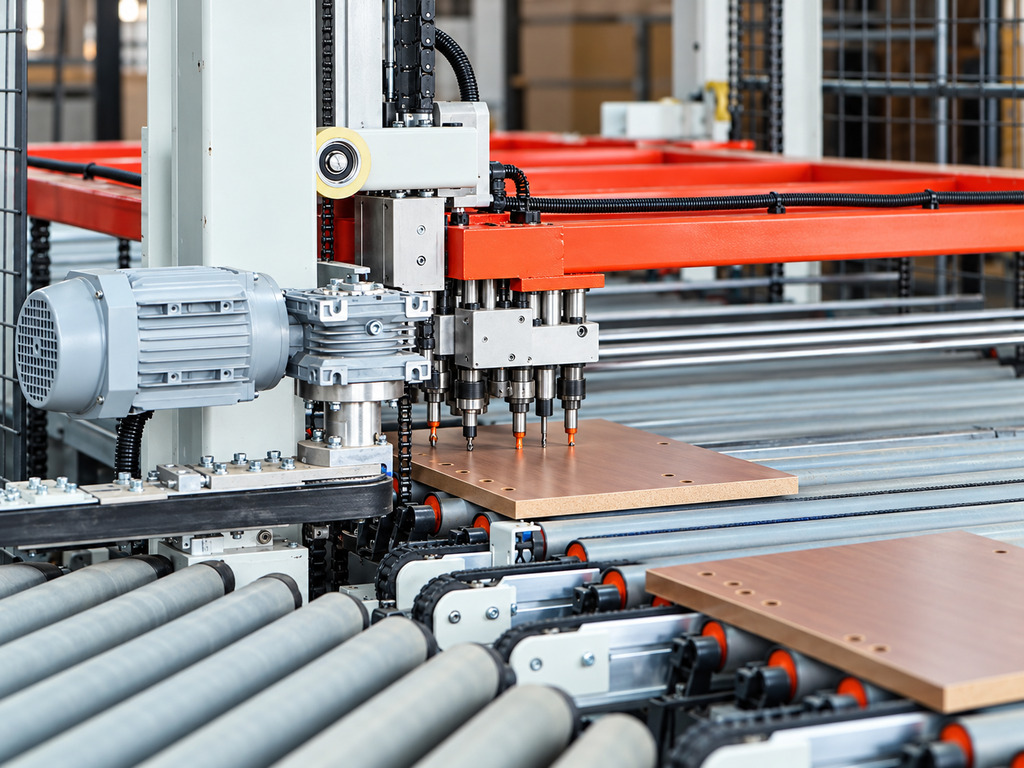
Machined areas may include:
- Hinge holes
- Drawer-slide positions
- Connector holes
- Shelf-support holes
- Handle holes
- Plumbing openings
- Wall-mounting points
- Cable openings when required
Accurate drilling is important for stable assembly. Incorrect hole positions may cause doors to sit unevenly, drawers to move poorly or connecting hardware to become loose.
For wall-mounted bathroom cabinets, the mounting points and internal support structure require particular attention because they must support the completed cabinet after installation.
Plumbing openings should follow the approved technical drawing and provide enough space for the drainpipe and water connections.
After machining, dust and loose material should be removed before the panels continue to edge banding or surface finishing.
5. Edge Banding and Moisture Protection
Exposed board edges require treatment to improve the appearance of the cabinet and reduce moisture penetration.
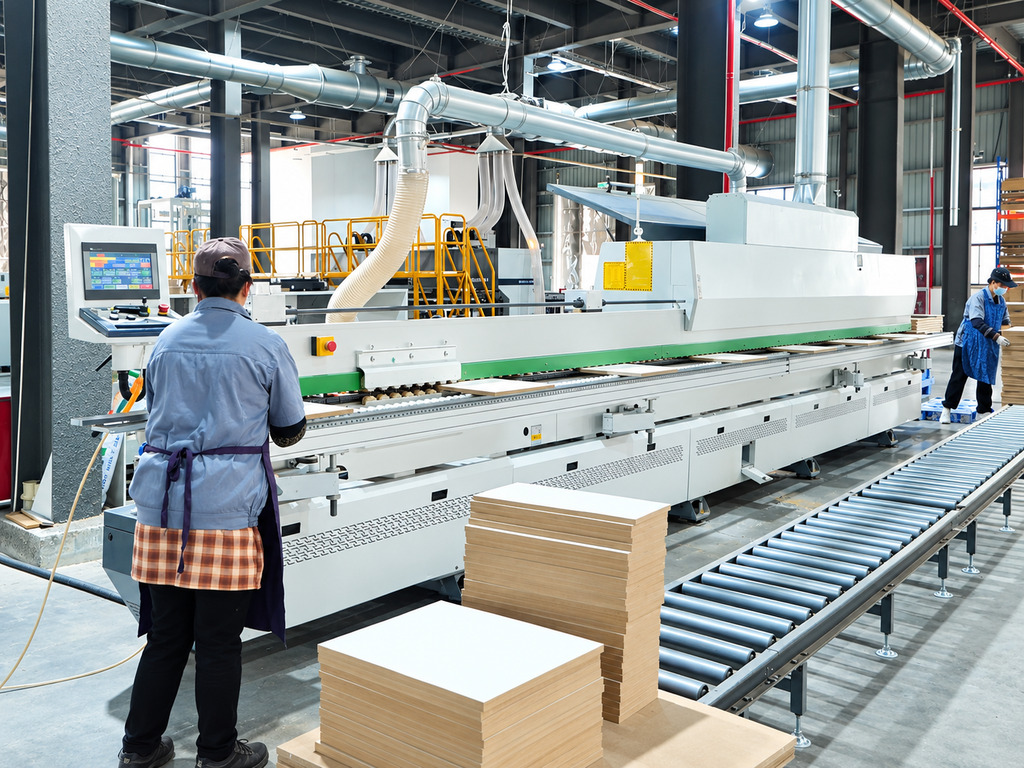
Depending on the cabinet material and design, edge treatment may include:
- PVC edge banding
- ABS edge banding
- Veneer edge banding
- Painted edges
- Sealed plywood edges
- Waterproof sealant in selected areas
Edge-banding material is applied with adhesive and pressure. Excess material is then trimmed to create a clean and even finish.
Quality inspectors should check:
- Edge alignment
- Adhesion
- Corner finish
- Colour matching
- Glue residue
- Gaps or lifting
- Damage near drilled holes
Areas near the basin, countertop and plumbing openings may require additional protection because they are more likely to be exposed to moisture.
Edge banding may not be the most noticeable feature in a product photograph, but it can have a significant effect on the cabinet’s long-term performance in a bathroom environment.
6. Sanding and Surface Finishing
The surface-finishing process depends on the cabinet material and approved design.
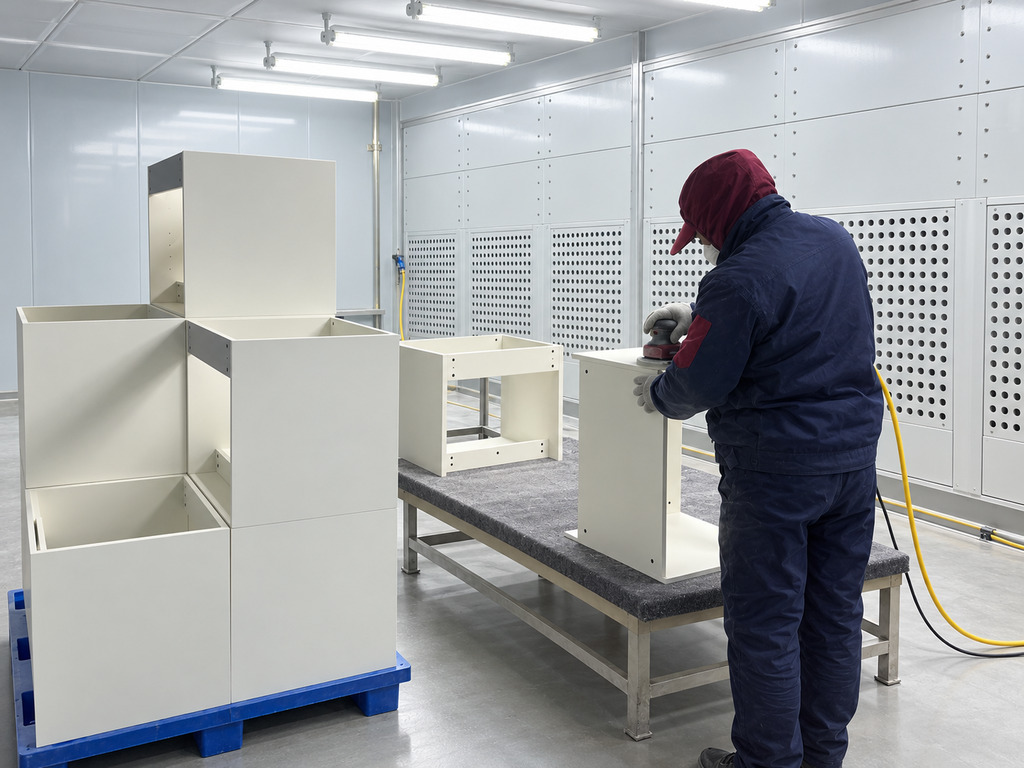
Common bathroom cabinet finishes include:
- Painted finishes
- Melamine
- Wood veneer
- Laminate
- PVC film
- UV coating
- Natural wood finish
- Powder-coated metal
Painted bathroom cabinets may require several stages, including sanding, priming, colour coating and application of a protective topcoat.
Each layer should be allowed to dry or cure according to the production process before the next stage begins.
Wood-effect bathroom cabinets may use veneer, melamine or laminate to create finishes such as oak, walnut and ash.
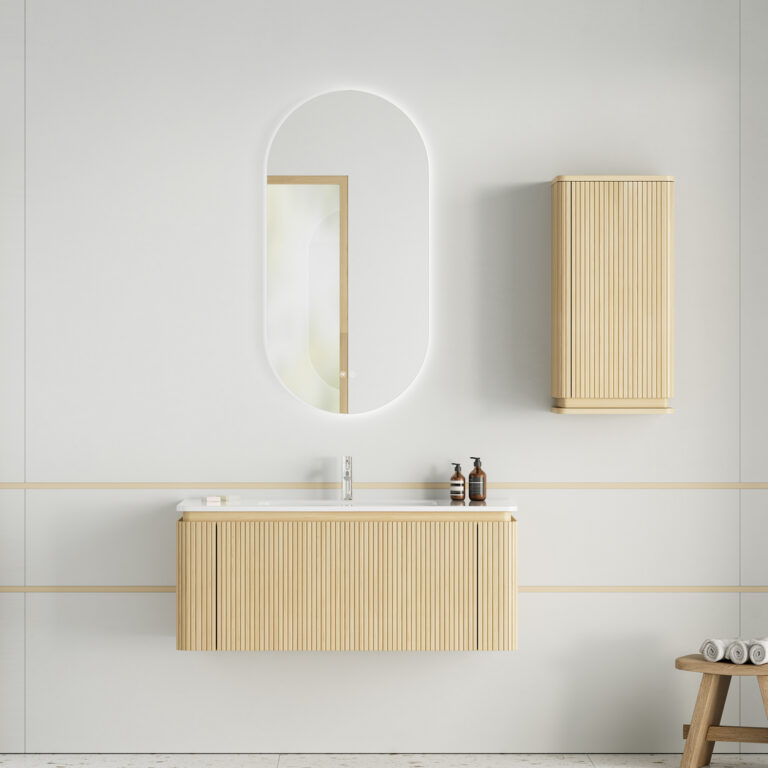
Fluted bathroom cabinets require additional attention because the grooves must remain consistent and the surface coating must cover the recessed areas evenly.
The inspection team checks for:
- Colour differences
- Scratches
- Dust particles
- Uneven coating
- Paint runs
- Orange-peel texture
- Exposed edges
- Veneer damage
- Inconsistent wood-grain direction
For bulk orders, colour should be compared with an approved sample under consistent lighting. This is especially important when several cabinets will be installed in the same showroom, hotel or apartment project.
7. Cabinet Body Assembly
Once the panels and finished components are ready, the main cabinet body can be assembled.
The assembly process may include:
- Connecting side and bottom panels
- Installing internal dividers
- Fixing the back panel
- Assembling drawer boxes
- Adding shelves
- Installing reinforcement components
- Fitting wall brackets or cabinet legs
The assembled cabinet should remain square, stable and level.
Workers check whether the corners align correctly and whether there are visible gaps between connected panels. Loose or uneven connections may reduce structural stability and cause problems during installation.
For wall-mounted bathroom cabinets, the mounting structure should match the cabinet’s dimensions and weight.
For freestanding bathroom cabinets, the legs or adjustable feet must be installed securely and checked for stability on a level surface.
8. Drawer Slides, Hinges and Hardware Installation
Hardware has a direct effect on the cabinet’s daily performance and perceived quality.
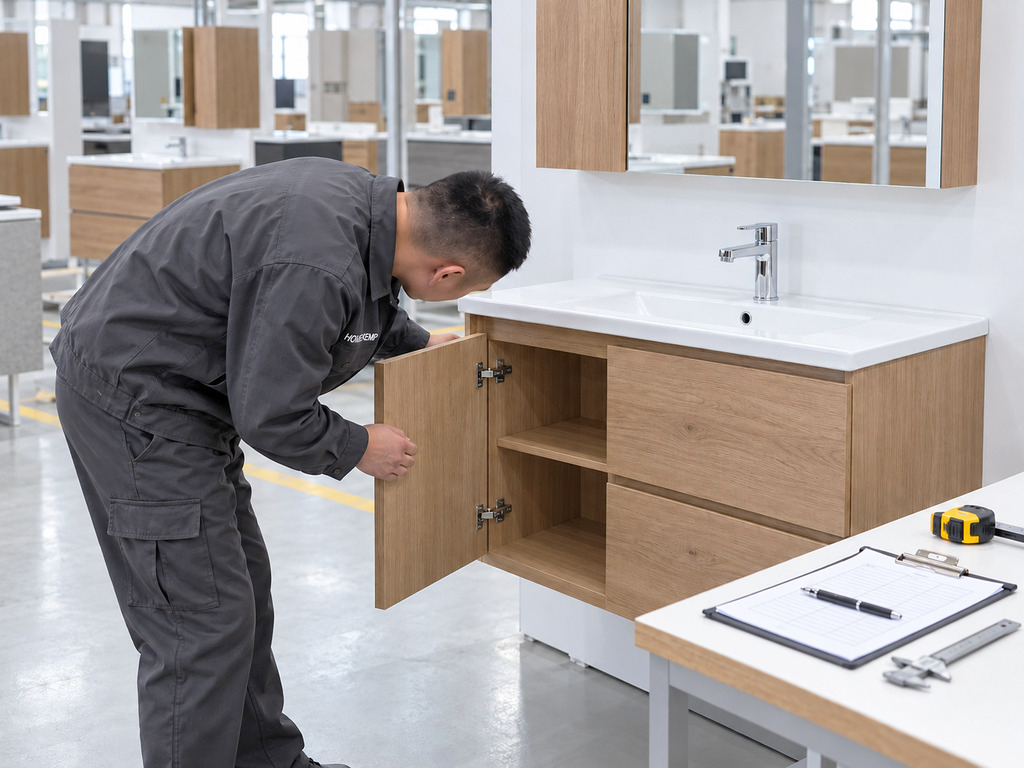
Common bathroom cabinet hardware includes:
- Soft-close drawer slides
- Soft-close hinges
- Push-to-open mechanisms
- Handles
- Finger-pull profiles
- Wall-mounting brackets
- Adjustable feet
- Drawer organisers
After installation, every drawer and door should be opened and closed repeatedly.
Inspectors check:
- Smooth drawer movement
- Soft-close performance
- Door alignment
- Consistent gaps
- Hinge adjustment
- Handle position
- Drawer stability
- Unusual noise
- Loose screws or fittings
Soft-close hardware should perform consistently across the production batch. A drawer that closes unevenly or requires excessive force may indicate incorrect positioning or adjustment.
For handleless cabinets, the finger-pull area or push-to-open mechanism should be easy to operate while maintaining a clean appearance.
9. Basin and Countertop Trial Fitting
If the order includes a basin or countertop, trial fitting should be completed before packaging.
Bathroom cabinet orders may include:
- Ceramic basins
- Resin basins
- Sintered-stone countertops
- Quartz countertops
- Solid-surface countertops
- Countertop basins
- Integrated basins
The production team checks whether the basin or countertop fits the cabinet correctly and whether the plumbing opening is in the required position.
Important inspection points include:
- Overall dimensions
- Basin position
- Countertop overhang
- Drain-hole position
- Surface condition
- Cabinet-to-countertop fit
- Gaps between components
- Colour coordination
The basin and countertop may be packed separately to reduce the risk of damage during transportation. Matching labels should be used so installers can identify the correct components after delivery.
If faucets and drains are included, their compatibility and installation positions should also be confirmed.
10. Final Quality Inspection
Each completed bathroom cabinet should undergo a final quality inspection before packaging.
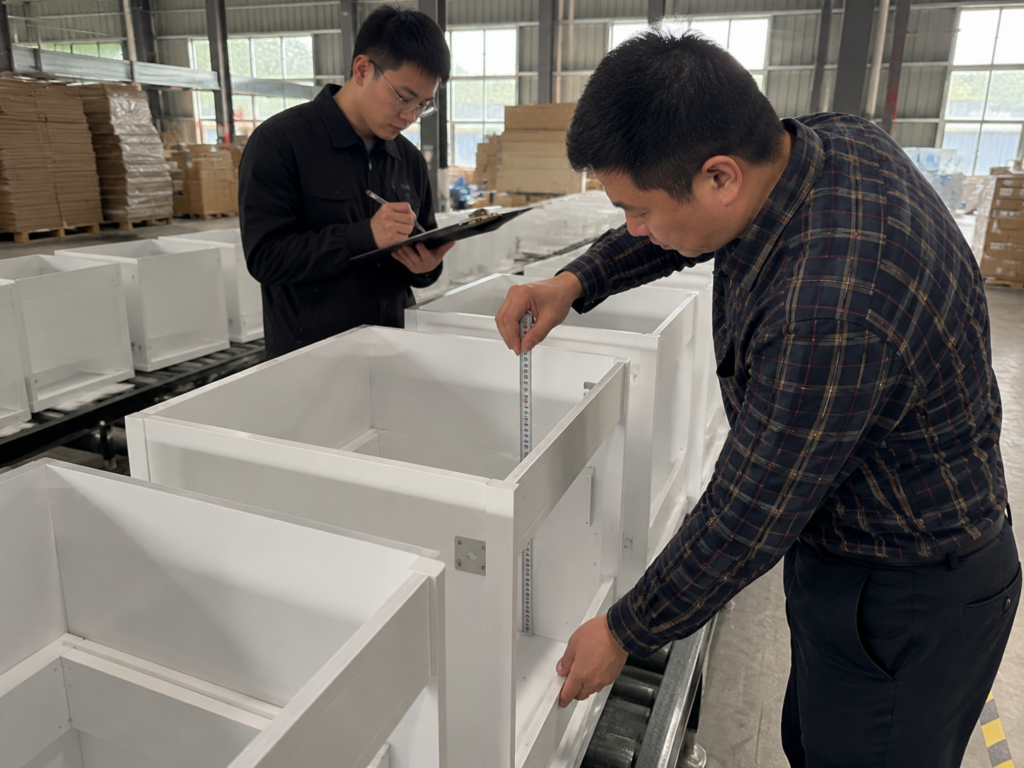
The inspection normally covers:
- Cabinet dimensions
- Surface colour and finish
- Scratches, dents and chips
- Panel connections
- Cabinet stability
- Door and drawer alignment
- Soft-close operation
- Hardware installation
- Basin or countertop fitting
- Plumbing openings
- Mounting accessories
- Labels and instructions
- Order specifications
The finished cabinet should be compared with the approved sample, technical drawing and purchase order.
For wholesale and project orders, consistency is particularly important. Cabinets installed in the same development or sold as part of the same retail collection should have matching dimensions, finishes and hardware performance.
Products that do not meet the confirmed standard should be repaired, replaced or separated before packing.
Inspection records and product photographs can also be prepared according to the buyer’s requirements. Buyers may arrange third-party pre-shipment inspections when necessary.
11. Moisture and Performance Testing
Testing requirements depend on the cabinet material, surface finish, target market and buyer’s quality standard.
Relevant tests may include:
- Surface water-resistance testing
- Edge-sealing inspection
- Coating-adhesion testing
- Drawer-cycle testing
- Hinge-cycle testing
- Cabinet-load testing
- Wall-bracket testing
- Basin-fitting inspection
- Packaging drop testing
Bathroom cabinets are used in humid environments, but this does not mean every wood-based cabinet can remain in direct contact with water for long periods.
Moisture resistance depends on several factors, including panel material, surface treatment, edge sealing, installation and daily maintenance.
Buyers should confirm the required testing method and product claims before mass production instead of relying only on general terms such as “waterproof.”
Accurate product descriptions and maintenance instructions can help reduce misunderstandings, warranty claims and avoidable returns.
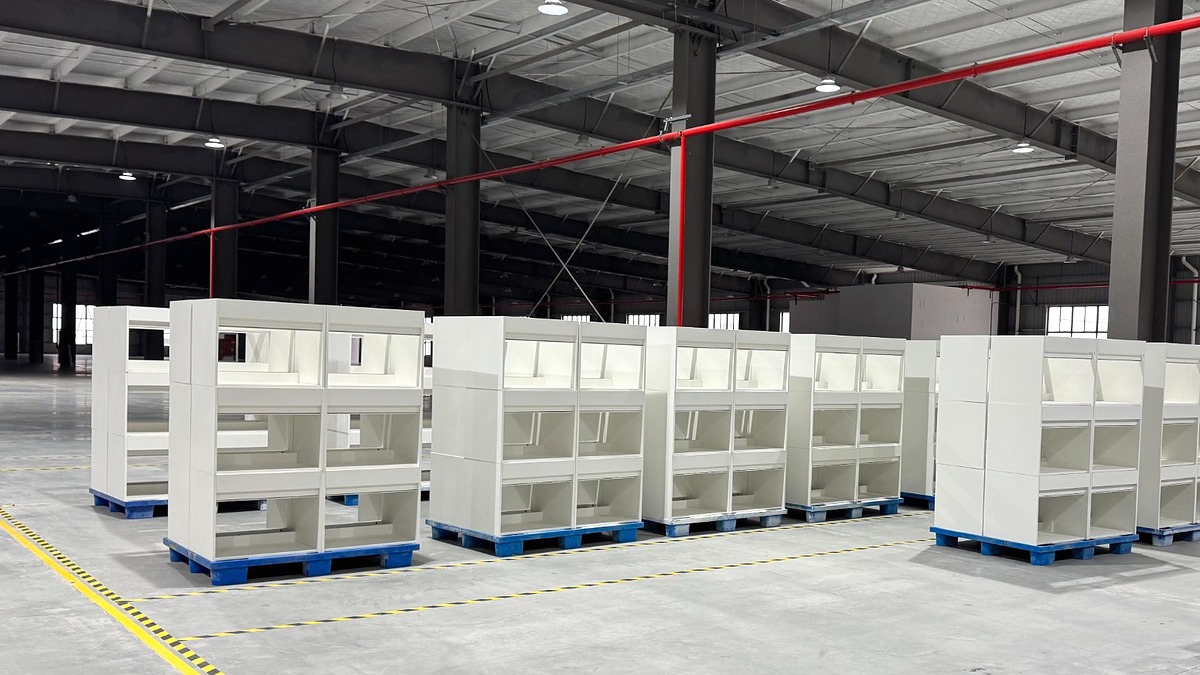
12. Protective Packaging and Loading
Bathroom cabinets may pass through factories, warehouses, ports and distribution centres before reaching the final customer.
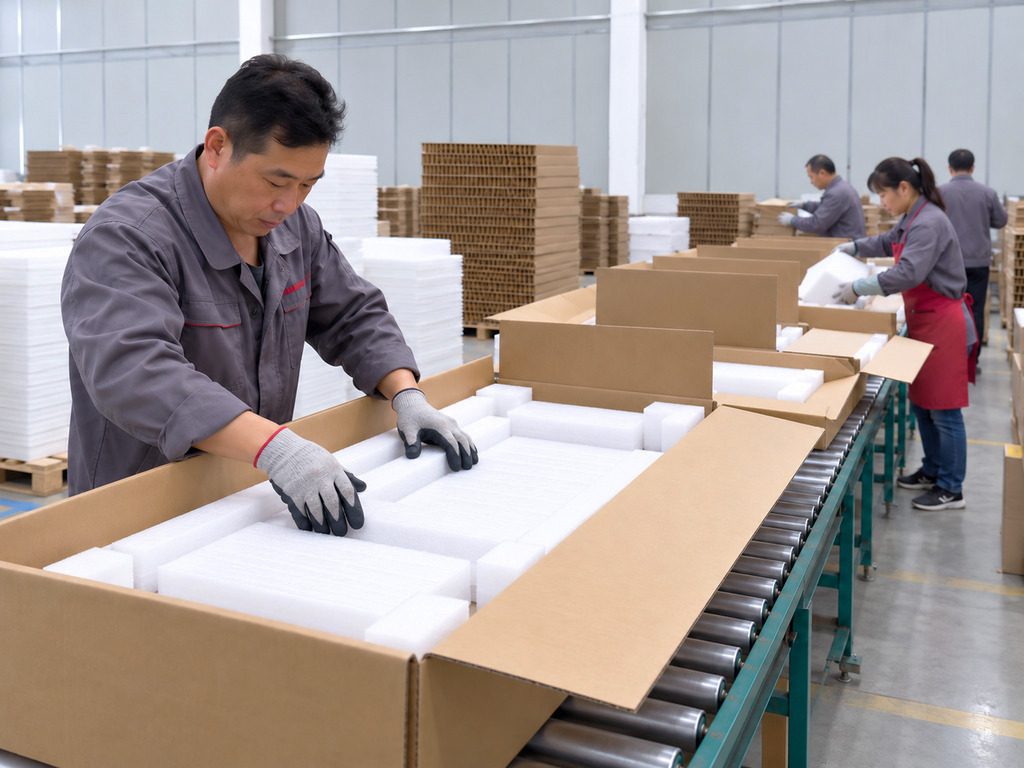
Protective packaging is therefore an important part of the bathroom cabinet manufacturing process.
A packaging system may include:
- Surface-protection film
- Protective bags
- EPE foam
- Reinforced corner protectors
- Honeycomb board
- Strong export cartons
- Separate basin packaging
- Hardware boxes
- Wooden pallets when required
The packaging structure should be selected according to the cabinet’s size, weight, surface finish and shipping method.
Painted and high-gloss surfaces require protection against scratches. Ceramic basins and stone countertops require additional cushioning to reduce breakage.
For e-commerce customers, individual cartons may be handled many times during storage and last-mile delivery. Stronger packaging and appropriate drop-test evaluation can help reduce damage, replacement costs and customer complaints.
Cartons can also be customised with:
- Private-label branding
- Model numbers
- Product information
- Barcodes
- Handling symbols
- Installation instructions
- Shipping labels
Before bulk production, buyers should approve both the cabinet and its packaging. Inadequate packaging can damage a well-manufactured product before it reaches the customer.
How Quality Control Supports Bulk Orders
Quality control should not begin only after the cabinet has been assembled.
Material selection is only one part of supplier evaluation. Buyers should also review production capability, quality-control procedures, communication and delivery management when choosing a bathroom cabinet manufacturer.
It should be applied throughout the complete production process, including material inspection, panel processing, edge treatment, finishing, assembly and packaging.
A controlled production process can help:
- Maintain consistent dimensions
- Improve colour consistency
- Reduce drawer and door problems
- Prevent visible surface defects
- Improve installation efficiency
- Reduce transportation damage
- Lower complaints and return rates
- Protect the buyer’s brand reputation
- Support long-term repeat orders
For hotel, apartment and retail programmes, buyers may also require approved samples, inspection reports, packaging tests or third-party inspections.
These requirements should be discussed before production begins so they can be included in the manufacturing and delivery schedule.
OEM and ODM Bathroom Cabinet Solutions
Bathroom cabinet requirements differ between Europe, North America, Australia and other markets.
HOMEKEMP supports OEM and ODM bathroom cabinet production for wholesalers, distributors, bathroom retailers, e-commerce brands and project buyers.
Available customisation options include:
- Custom cabinet sizes
- Wall-mounted and freestanding structures
- Plywood, MDF, particleboard, solid wood and PVC options
- Painted, melamine, veneer and laminate finishes
- Custom colours
- Fluted cabinet fronts
- Door and drawer configurations
- Handles and handleless designs
- Soft-close hardware
- Basins and countertops
- Side cabinets and matching storage
- Plumbing-opening positions
- Logos and private labels
- Installation manuals
- Barcodes and shipping labels
- Retail and e-commerce packaging
Samples can be produced before mass production so buyers can confirm the cabinet dimensions, material, colour, finish, hardware, basin fitting and packaging.
This sample-approval stage provides a clear quality reference and helps reduce misunderstandings before the complete order enters production.
Conclusion
Buyers sourcing matching illuminated mirrors can also learn about our LED bathroom mirror manufacturing process.The bathroom cabinet manufacturing process involves much more than cutting panels and assembling drawers.
Material selection, machining accuracy, edge sealing, surface finishing, hardware adjustment, quality inspection and protective packaging all influence the appearance and long-term performance of the finished cabinet.
Wholesale and project buyers should evaluate the complete production process rather than judging a supplier only by price or product photographs.
HOMEKEMP has manufactured and exported bathroom products since 2005. We supply custom bathroom cabinets for distributors, bathroom retailers, e-commerce brands, hotels, apartments and commercial projects across Europe, the Americas and Australia.
We provide B2B wholesale and project supply only, with a standard minimum order quantity of 20 pieces. Individual retail orders are not supplied.
Looking for a reliable bathroom cabinet manufacturer for your next wholesale or project order?
Contact HOMEKEMP to request our latest catalogue, available materials, customisation options and wholesale pricing.